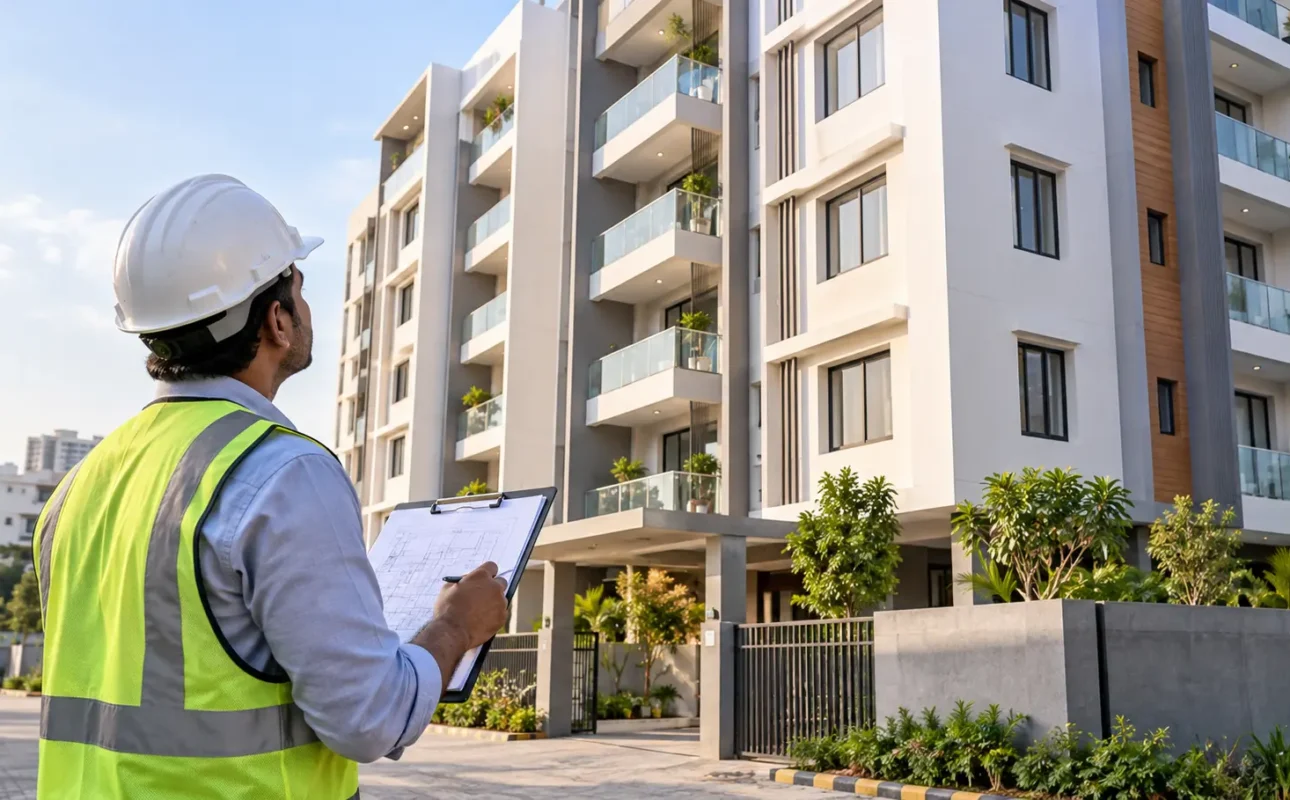
Construction quality affects an apartment’s safety, durability, comfort and maintenance. Attractive finishes do not show how well the structure, waterproofing, plumbing, electrical work, openings and common areas were executed.
The practical question for a Chennai homebuyer is how to check apartment construction quality before buying. This guide explains what you can observe during a site visit, what to ask the developer and when to involve a qualified engineer or property inspector.
What Does Construction Quality Mean in an Apartment?
Construction quality combines design, specifications, materials, workmanship, supervision, testing and defect correction. It covers the structure and foundation as well as walls, waterproofing, plumbing, electrical work, doors, windows, flooring, finishes and shared services.
No material or finish proves overall quality. Performance also depends on correct storage, installation, supervision and testing. Compare written specifications with accessible conditions and seek help for matters that cannot be judged visually.
Why Construction Quality Matters to Homebuyers
- Safety and durability: Structural work must suit the project’s design and conditions. A normal site visit cannot certify structural integrity.
- Repairs and maintenance: Sound waterproofing, plumbing, electrical installation and workmanship can reduce avoidable defects, although every building needs maintenance.
- Everyday comfort: Ventilation, heat exposure, window sealing, drainage and sound transmission affect daily living.
- Marketability: Upkeep and dependable systems may support buyer confidence, but location, age, demand, amenities and market conditions also influence resale. Quality does not guarantee appreciation.
Construction Quality Checklist: 9 Things to Check Before Buying an Apartment
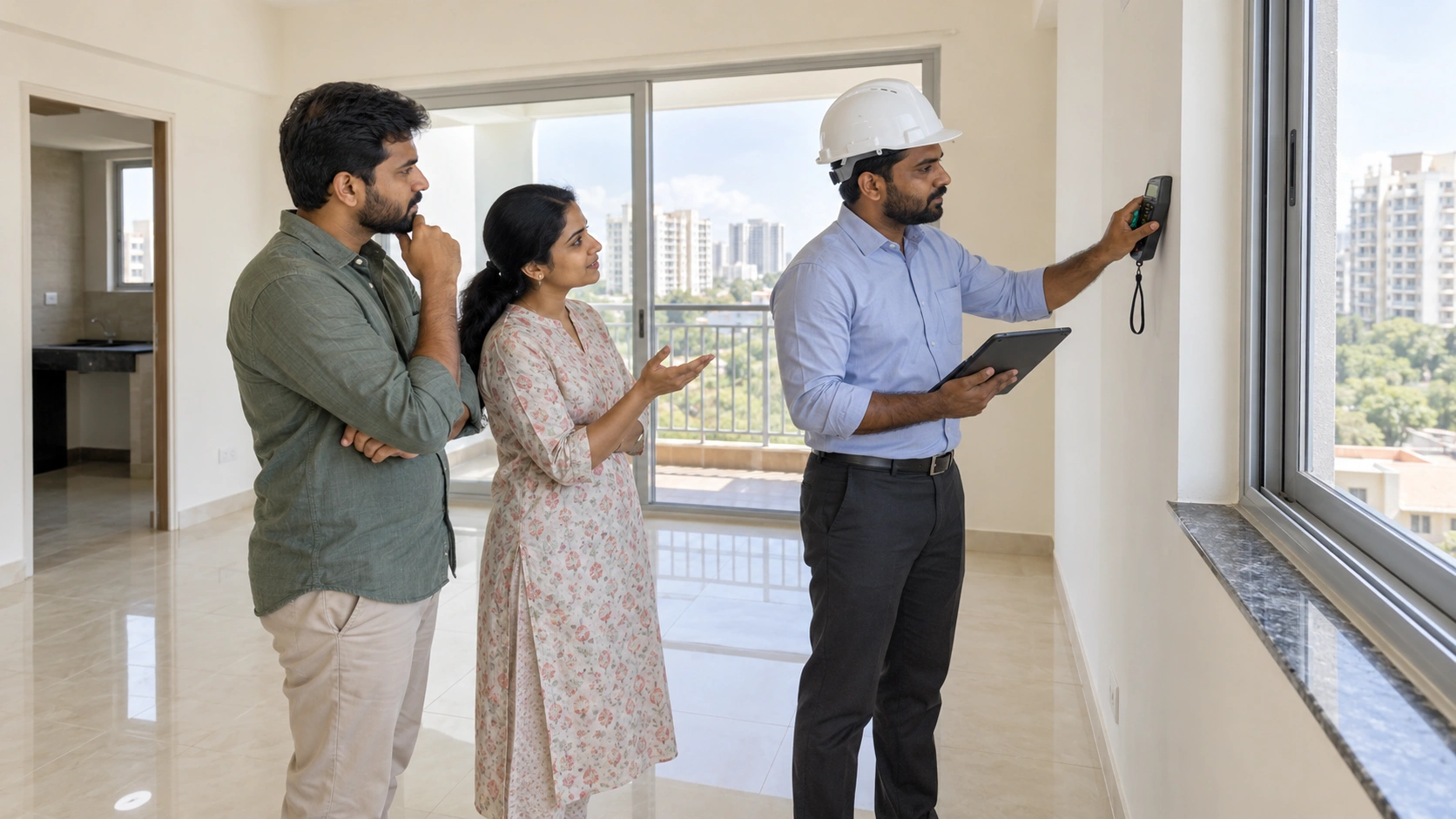
Use visible conditions to identify questions, not to make a structural diagnosis. Where possible, inspect the exact unit, compare it with written specifications and document concerns.
1. Structural System and Foundation
Ask about the structural system, consultant and available specifications. Where relevant, ask whether a geotechnical investigation informed the foundation design. Visual observation cannot confirm structural safety; use a qualified engineer for verification.
2. Walls and Plastering
Look for cracks, uneven surfaces, damp patches, peeling paint and poorly finished junctions. Cracks can have different causes, so record their locations and request an explanation or professional assessment rather than diagnosing them yourself.
3. Waterproofing and Water Seepage
Check wet areas and accessible parking or basement spaces for dampness, stains, peeling finishes or repeated repairs. Ask how waterproofing was tested and whether floors drain correctly.
4. Flooring and Tiling
Check whether floors appear level, tiles align, joints are consistent and surfaces are free from chips or cracks. With permission, check wet-area drainage. An inspector can assess suspected loose tiles or level differences more reliably.
5. Doors and Windows
Open and close accessible doors and windows. Check alignment, locks, hardware, frame sealing and signs of water entry. Compare window positions and ventilation with the approved or agreed plan.
6. Plumbing and Sanitary Work
Where permitted, check taps, flushes, visible joints, water flow and drainage. Ask about pipe specifications, pressure testing and concealed-leak procedures. Slow drainage or stains need investigation.
7. Electrical Work
Review the electrical specification, switch and socket positions, distribution board, earthing and circuit-protection information. Test points only through the authorised process. Do not open panels or perform technical tests yourself; use a qualified electrician or inspector.
8. Ventilation, Heat and Sound
Visit when you can assess sunlight and heat. Check airflow, window operation and external noise. Ask about wall and window specifications if sound matters; one visit cannot establish year-round performance.
9. Common Areas
Review accessible corridors, stairs, lifts, parking, terraces, external walls, drainage, utility areas and fire-safety provisions. Note incomplete work and ask who will correct it, by when and how completion will be recorded.
Construction Materials: What Should Buyers Ask?
Ask for the current written specifications covering structure, walls, waterproofing, flooring, doors, windows, plumbing, electrical work and sanitary fittings. If brands are named, ask whether approved equivalents are allowed and how substitutions are communicated.
Do not treat a material name as proof of quality. Suitability also depends on design, storage, installation, supervision and testing. Request written clarification when promised and installed specifications appear different.
Construction Quality vs Finish Quality
| Construction quality | Finish quality |
|---|---|
| Structure and execution | Paint and decorative appearance |
| Waterproofing and drainage | Tile pattern or design |
| Plumbing and electrical systems | Fixture and switch appearance |
| Wall and opening performance | Interior styling |
A premium-looking flat is not automatically well constructed. Finishes are easy to see, while important systems may be concealed. Assess both separately.
How Is Construction Quality Controlled During a Project?
Quality should be managed throughout construction, not checked only after painting. A project-level process may include:
- Approval and verification of specified materials.
- Site supervision during each construction stage.
- Stage inspections for structural, masonry and service work.
- Workmanship checks before concealed work is covered.
- Testing of waterproofing, plumbing and electrical installations as applicable.
- Recording and correcting defects.
- Pre-handover inspection and closure of pending items.
Ask which checks apply to the exact project and what buyer-visible records or explanations are available.
Does RERA Guarantee Construction Quality?
No. RERA registration is not an independent quality certificate for every building element. The Real Estate (Regulation and Development) Act creates disclosure and promoter obligations, including adherence to sanctioned plans and specifications. Section 14(3) addresses specified structural, workmanship, quality and service defects reported within five years from handover, with a rectification duty under the Act.
They do not replace inspection or technical advice. Where applicable, verify the project on the official TNRERA portal and consult Viva Housing’s p/roperty legal guide.
Ready-to-Move vs Under-Construction: How to Check Quality
| Ready-to-move apartment | Under-construction apartment |
|---|---|
| Inspect the exact unit and common areas | Review plans, specifications and current site progress |
| Check visible seepage, finishes and operation | Ask how each stage is supervised and tested |
| Test permitted plumbing and electrical points | Compare installed work with declared specifications |
| Record defects before handover | Visit only at permitted stages and follow site-safety rules |
| Review completed-building maintenance | Assess the developer's project-specific transparency and records |
A completed home permits more direct inspection; an unfinished home requires greater reliance on documents, permitted observations and professional expertise. Read Viva Housing’s under-construction vs ready-to-move guide for the wider comparison.
Red Flags That May Need Further Inspection
Recurring dampness, leakage, unexplained substantial cracks, uneven floors, misaligned openings, incomplete common areas or major specification differences deserve investigation. A visible symptom does not automatically prove a structural defect. Ask for the cause and correction in writing, and use a qualified professional where the issue may be significant.
Questions to Ask the Developer About Construction Quality
| Ask | Why it matters |
|---|---|
| Who is the structural consultant? | Identifies design responsibility |
| What are the written specifications? | Enables a delivery comparison |
| How is waterproofing tested? | Clarifies wet-area checks |
| Are plumbing systems pressure-tested? | Checks the process for leaks |
| What stage inspections occur? | Shows how work is monitored |
| Can buyers make permitted visits? | Enables progress review |
| How are defects closed? | Clarifies correction procedures |
| Is an independent inspection allowed? | Enables professional verification |
Pre-Handover Apartment Quality Checklist
Before handover, review or arrange inspection of:
- Walls, ceilings, flooring and tile joints
- Bathroom, balcony and utility-area drainage
- Visible dampness, leakage or repair marks
- Doors, windows, locks and fittings
- Water flow, fixtures and visible plumbing joints
- Authorised electrical tests and distribution-board information
- Ventilation, daylight and external noise
- Balconies, railings and accessible safety features
- Common areas, lifts, parking and utility spaces
- Specifications against visible delivery
Photograph unresolved items, agree responsibilities and timelines in writing, and retain the final closure record.
Learn About Viva Housing's Construction Quality Approach
Specifications can differ between projects. Viva Housing’s Construction Quality page explains checks for project-specific structure, finishes, electrical and plumbing work, and common areas. Request the latest specification rather than assuming every project uses identical materials or features.
Explore current projects or contact Viva Housing to request project-specific information and arrange a site visit.
Final Takeaway
Evaluate construction quality through written specifications, visible workmanship, project-stage information, testing processes and inspection of the unit and common areas. Document unanswered questions and use qualified professionals for technical concerns. Attractive finishes matter, but they cannot replace checks on the systems that affect long-term use.
Frequently Asked Questions
1. How can I check the construction quality of an apartment?
Compare specifications with the exact unit and common areas. Review walls, waterproofing, flooring, openings, plumbing, electrical information and ventilation. Use a qualified professional where visual checks are insufficient.
2. What are common signs that need further inspection?
Dampness, leakage, substantial unexplained cracks, uneven floors and misaligned openings may require investigation. They do not prove structural failure; seek an assessment when their cause or severity is unclear.
3. How can I check wall and flooring quality?
Look for cracks, dampness, uneven plaster, chipped tiles and level differences. Check wet-area drainage where permitted. An inspector can assess suspected loose tiles, moisture or significant cracks.
4. How do I check for water leakage before buying a flat?
Check wet areas, ceilings and external-wall junctions for stains, dampness, peeling finishes or repairs. Ask how waterproofing was tested and document issues before purchase or handover.
5. Does RERA registration guarantee construction quality?
No. Registration creates disclosure and promoter obligations, not an independent certificate for every element. Verify the project record, specifications and property as part of wider due diligence.
6. Should I arrange a professional inspection before possession?
Yes, particularly if you notice possible defects. Confirm that it is permitted, select a suitably qualified professional and request a written snag report with required follow-up.
Disclaimer: This article provides general educational information and is not a structural, engineering or legal certification. Obtain advice for the exact property where required.