Viva Housing | Builders in South Chennai

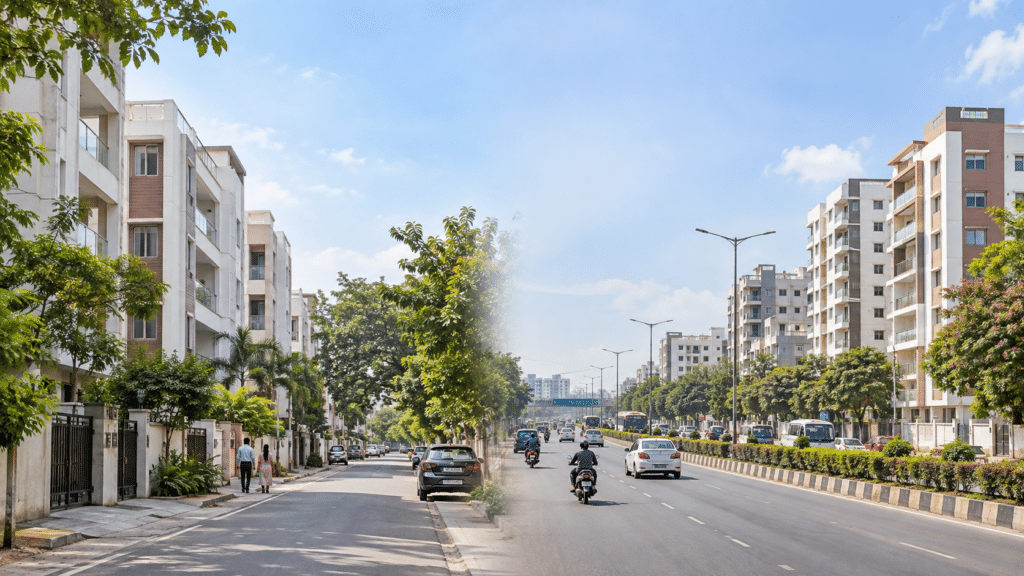
Side-by-side view of apartment neighbourhoods representing Pammal and Pallavaram in Chennai

Pammal vs Pallavaram: Which Is Better for a Flat?

Pammal and Pallavaram are neighbouring residential markets in South Chennai, but they do not offer the same buying experience. Pallavaram has more direct access to GST Road, its suburban railway station, and the wider Chennai International Airport transport corridor. Pammal lies further inside the Pallavaram–Kundrathur side and can suit buyers who find the right combination of apartment, neighbourhood and total cost there. The better choice depends on your workplace, daily route, budget, public-transport needs, preferred apartment, and family routine. This guide compares Pammal vs Pallavaram side by side, including indicative property rates, connectivity, social infrastructure, project options and the checks to complete during a site visit. Pammal vs Pallavaram: Quick Comparison for Flat Buyers Pallavaram may suit buyers who prioritise direct GST Road access, suburban rail and the airport corridor. Pammal may suit buyers considering residential options further inside the Pallavaram–Kundrathur side. The right choice depends on the exact project location, usable area, total cost, commute, and neighbourhood conditions rather than the locality name alone. Pammal vs Pallavaram at a Glance Factor Pammal Pallavaram Location West of Pallavaram, along the Pallavaram–Kundrathur side Established South Chennai locality along and around GST Road GST Road access Usually reached through connecting roads via Pallavaram; check the route from the project More direct for projects close to the GST Road corridor Airport access Accessible through Pallavaram and the airport-side road network Closer to the airport corridor, depending on the exact project Suburban railway access Residents generally travel to Pallavaram or another convenient station Pallavaram has its own suburban railway station Metro and feeder connectivity Requires a road or feeder connection to the Airport Metro or another station Connected to the wider Airport Metro corridor; CMRL lists S100 via Pallavaram Indicative apartment pricing Portal averages vary by listing mix; compare exact projects Portal averages vary by listing mix; compare exact projects Residential environment Mix of interior streets, local main roads and apartment pockets Mix of GST Road-facing, airport-corridor and interior residential pockets Schools and healthcare Local options and wider access towards Pallavaram and Chromepet Local options plus access towards Chromepet, GST Road and the airport corridor Shopping and daily needs Neighbourhood retail and services across Pammal Main Road and nearby streets Established retail and services around GST Road and interior neighbourhoods Apartment choices New and resale options across small and larger developments New, ready-to-move and resale choices across different pockets May suit Buyers who find the right home, budget and route inside the Pammal side Buyers who value direct multimodal connectivity and airport/GST Road access The table is a starting point. Conditions can change from one street or project entrance to another, so compare the exact homes rather than treating either locality as uniform. Location and Neighbourhood Overview Where is Pammal? Pammal is a South Chennai residential locality located to the west of Pallavaram. Pallavaram–Kundrathur Road is an important approach route, while GST Road, Pallavaram railway station and Chennai International Airport are reached through the surrounding road network. Pammal connects with neighbourhoods such as Pallavaram, Anakaputhur and Pozhichalur. Its position can work well for households whose routines are centred on this western side of the airport corridor. However, a project described as being in Pammal may be closer to or farther from Pallavaram than another Pammal property. Always check the project pin, approach road, and normal commuting route. Where is Pallavaram? Pallavaram is an established South Chennai locality on the GST Road and airport corridor. It has a suburban railway station and road connections towards Chromepet, Tambaram, Pammal, Pozhichalur and the Pallavaram–Thoraipakkam Radial Road side. Chennai International Airport Metro is part of the operational Metro network. CMRL also lists the S100 minibus from Airport Metro to Tambaram East through Pallavaram and Chromepet. This gives Pallavaram buyers more transport modes to evaluate, although the usefulness of each option still depends on the exact distance from the chosen apartment. Flat Prices in Pammal vs Pallavaram Locality averages are useful for orientation, but they are not quotations for a particular flat. Housing.com’s 2026 locality pages, accessed on 16 September 2026, displayed the following indicative averages: Metric Pammal Pallavaram Indicative average property rate ₹7,397 per sq. ft. ₹6,206 per sq. ft. Source Housing.com locality price-trends page Housing.com locality price-trends page Source status Page titled “2026”; accessed 16 September 2026 Page titled “2026”; accessed 16 September 2026 These figures should be treated cautiously. The Pammal source page itself displays a different average in its FAQ section, showing that portal calculations or cached sections can be inconsistent. Listing portals also combine properties of different ages, types, specifications and micro-locations. A locality average therefore does not prove that one area or project is cheaper. Actual flat prices can change with the project, construction stage, configuration, floor, usable area, parking, specifications and current inventory. Obtain a dated, written cost sheet for the exact unit you are considering. Contact Viva Housing for current availability, applicable area, floor plan, and unit-specific price. What Does Your Budget Get in Each Location? A budget comparison should begin with the total cost of ownership, not only the advertised rate per square foot. Two flats with similar prices may provide very different usable space, parking arrangements, specifications, and long-term expenses. Compare each shortlisted unit on: BHK configuration and actual room dimensions Carpet or usable area, not only the published overall area New construction versus resale property Project age and construction condition Covered or open parking and allocation terms Amenities you will actually use Floor, orientation, natural light and ventilation Undivided share of land where applicable Registration, taxes and loan-related expenses Interior work, moving costs and immediate repairs Monthly maintenance and future common-area costs Use one spreadsheet for both locations and compare the same fields. This prevents an attractive base price from hiding differences in usable area or total cost. Connectivity: Pammal vs Pallavaram GST Road access Pallavaram has the clearer advantage for buyers who need direct GST Road access because the locality sits on the corridor. From Pammal, residents generally use connecting roads towards Pallavaram and GST Road.
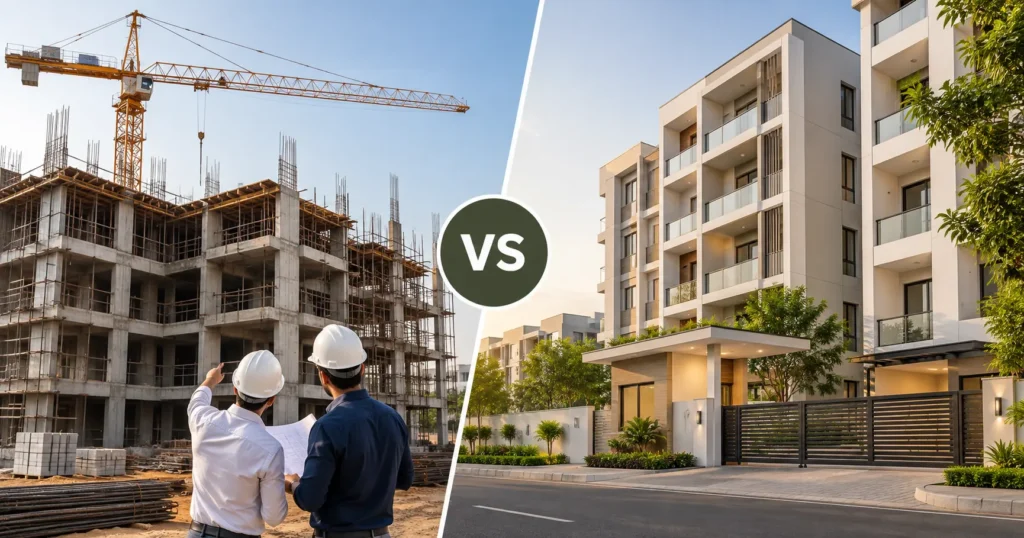

Under construction vs ready to move homes in Chennai

Under-Construction vs. Ready-to-Move Homes: What’s Better?

An under-construction property may suit buyers who can wait, prefer construction-linked payments and accept execution risk. A ready-to-move property may suit buyers who need possession sooner and want to inspect the completed home. Neither is automatically better. The right choice depends on your deadline, complete budget, current rent, financing plan and risk tolerance. Under-Construction vs Ready-to-Move Property: Quick Comparison Factor Under-construction property Ready-to-move property Price May have a lower entry price; not guaranteed May carry a completion premium Possession After construction and handover requirements After purchase, registration and agreed handover Construction risk Greater exposure to delay and execution risk No future construction wait; quality checks remain essential Customisation Limited changes may be possible if the developer permits them Usually limited to interiors or permissible alterations Home loan Disbursement may follow construction progress Processed against a completed property and transaction GST May apply based on status and prevailing law May fall outside GST when completion conditions are met Tax benefits Timing depends on current rules and eligibility Eligibility may begin sooner when conditions are met Rental income Normally only after possession May begin sooner after handover and preparation Price-growth potential Possible, never guaranteed Finished product and surroundings are clearer RERA protection Verify registration and project disclosures where applicable Review registration history and completion records May suit Buyers who can wait and manage construction-stage uncertainty Buyers who prioritise inspection and earlier occupancy This table is a starting point, not a substitute for reviewing the exact property, agreement, approvals, payment schedule and total acquisition cost. What Is an Under-Construction Property? An under-construction property is purchased before the building and selected unit are completed and ready for lawful handover. Payments and loan disbursement may follow construction milestones. The buyer therefore assesses plans, specifications, contractual commitments, the developer’s record and site progress—not a finished home. Before booking, confirm the declared schedule, delay provisions, specifications, payment stages and applicable registration details. Advantages of Buying an Under-Construction Property Potentially lower entry cost Some projects have a lower entry price than comparable completed homes. Compare total costs because this varies by stage, demand and location. Construction-linked payment flexibility Payments may be spread across agreed construction milestones. Ensure every instalment matches the agreement and verified progress. Possibility of price growth Value may rise if the project and market develop favourably, but this is not assured. Delays, excess supply or weaker demand can remove the expected advantage. Newer planning and specifications Newer projects may offer contemporary layouts and building systems. Compare these with approved documents and written specifications, not promotional images alone. Limited customisation opportunities The developer may permit selected finishes or limited non-structural changes. Record the scope, charges and deadline in writing. Disadvantages of an Under-Construction Property Possession-delay risk Construction can face approval, funding, supply or execution delays. Review the agreement’s timeline and delay terms, then verify site progress. Project and execution risk The final unit cannot yet be fully inspected. Buyers rely more on execution, approved plans and the agreement. RERA registration, where applicable, does not replace independent due diligence. Rent and loan outflow may overlap Rent may overlap with pre-EMI, interest or EMI-related payments. Calculate this with the lender before committing. Final delivery may differ from expectations Renders and sample flats are illustrative unless the feature appears in binding documents. Record agreed specifications and changes. Dependence on developer execution Review completed work and the exact project’s records. Reputation alone is not sufficient evidence of delivery. What Is a Ready-to-Move Property? A ready-to-move property is a completed home available for inspection and intended for possession after purchase, registration and handover requirements. “Ready” should not be accepted only as a marketing label. Verify applicable completion or occupancy documents, approved plans, title, encumbrance records, utilities, maintenance arrangements and pending work. Inspect the exact unit, not only a model apartment. Advantages of Ready-to-Move Properties Earlier possession Buyers may move in sooner after the transaction and handover, helping households with a firm relocation date or ongoing rent. Inspection of the actual home You can assess layout, ventilation, workmanship, common areas, parking and access. Record defects and agreed corrections before handover. Established surroundings Completed developments make access, water arrangements, maintenance and surrounding conditions easier to assess. Earlier rental opportunity Rental preparation may begin after purchase and handover. Actual rent and occupancy remain market-dependent. No future construction wait for the unit The home is already built, removing the wait for its construction. Documentation, maintenance, and defect risks still require review. Disadvantages of Ready-to-Move Properties Potentially higher upfront cost A completed home may be priced higher because the buyer can inspect and use it sooner. Compare the total cost, including statutory charges, maintenance deposits, parking, interiors, financing, and moving expenses, not only the advertised price. Less scope for customisation Changes are generally limited to interiors and alterations permitted by the building rules. Structural or service-related changes may be restricted. Older inventory in some cases Not every ready property is newly completed. Check the building’s age, maintenance history, waterproofing, lifts, utilities, common areas and previous occupation where relevant. Maintenance and defect considerations Inspect the exact unit and common areas carefully. Ask how pending works, defects, maintenance charges and association responsibilities will be handled after purchase. Under-Construction vs Ready-to-Move: Detailed Comparison Price and payment Under-construction homes may use stage-linked payments; ready homes usually require funding over a shorter transaction period. Compare itemised cost sheets on the same basis. Possession timeline An under-construction buyer waits for completion. A ready-home buyer may obtain possession sooner after legal, financial and handover steps. Avoid universal timelines. Construction and developer risk Unfinished work creates greater execution risk. With a ready property, inspect existing quality and maintenance. Verify the specific project in either case. Home-loan considerations Both types may qualify for loans subject to lender, borrower and document checks. Under-construction disbursement may follow construction stages. Compare interest, pre-EMI or EMI treatment, charges, tenure and conditions. GST and tax implications GST depends on construction or completion status, payment timing and prevailing law. Confirm the exact unit’s treatment with a qualified tax professional before

First time home buyer in Pallavaram choosing an apartment

First-Time Buyer’s Guide to Apartments in Pallavaram

For a first-time homebuyer, Pallavaram can be worth considering when the exact apartment fits your budget, daily travel, family needs and document checklist. The locality has access to GST Road, a suburban railway station and the wider Chennai airport transport corridor. However, the buying experience can differ significantly between a property near GST Road, one inside Zamin Pallavaram and one closer to the Pallavaram–Thoraipakkam Radial Road. Do not choose a flat using the locality name alone. Compare the exact project entrance, normal commuting route, declared carpet area, complete cost, construction status, approvals applicable to the project and the surrounding street conditions. This guide explains how a first time home buyer in Pallavaram can shortlist apartments methodically without relying on outdated price ranges, assumed travel times or future-infrastructure promises. Is Pallavaram Suitable for a First-Time Homebuyer? Pallavaram may suit buyers who want to evaluate South Chennai connectivity through road, suburban rail and access towards the airport corridor. It also gives buyers a mix of apartment locations, from established interior streets to properties closer to major roads. That does not make every Pallavaram apartment equally suitable. Noise, traffic, approach-road width, water and drainage arrangements, neighbourhood density, public-transport access and total ownership cost can change from one street to another. Use the following factors as a starting point: Factor What Pallavaram buyers should evaluate Daily travel Test the real route from the exact project to work, school and family commitments Public transport Check practical access to Pallavaram suburban railway station, buses and current Metro connections Airport corridor Consider access only if it genuinely supports your routine; also assess aircraft and road noise at the property Apartment choice Compare new, under-construction, ready and resale options according to current availability Complete cost Request a dated, unit-specific cost sheet instead of depending on a locality price range Livability Inspect water, drainage, waste collection, street lighting, shops, healthcare and surrounding land use Documents Verify the exact project, apartment and transaction with qualified professionals 1. Start With Your Requirements, Not the Project Brochure Before looking at flats for sale in Pallavaram Chennai, write down what the home must support for at least the next several years. Separate your requirements into three groups: Essential requirements Comfortable total budget and repayment plan Required number of bedrooms and practical room dimensions Maximum acceptable commute on normal working days Lift, parking or accessibility requirements Move-in timeline School, healthcare or family-location needs Preferred requirements Balcony, additional storage or work-from-home space Particular floor, orientation or natural-light preference Selected common facilities Proximity to a particular railway station, road or bus route Optional requirements Decorative features or amenities you may rarely use Extra common facilities that materially increase recurring maintenance A larger quoted area that does not improve the usable layout This prevents an attractive show flat or limited-time sales message from replacing the requirements that matter after possession. 2. Calculate the Complete Apartment Cost The earlier version of this article published a fixed Pallavaram price range. That should not be used because apartment prices change with the project, exact location, construction stage, configuration, usable area, floor, parking, specifications, availability and date of enquiry. Request a dated cost sheet for the exact unit. It should help you identify, where applicable: Apartment consideration Area used for the quotation Parking-related amount Applicable taxes Stamp duty and registration-related expenses Maintenance deposit or advance maintenance Corpus or association-related amount Utility, documentation or other separately stated charges Loan-processing and professional-review costs Interior work, appliances and moving expenses Financial buffer for changes or unexpected costs Do not assume that the maximum loan offered by a lender is the amount you can comfortably repay. Compare repayment with normal household expenses, emergency savings and other commitments. Obtain advice appropriate to your financial situation before making a major commitment. 3. Compare Carpet Area and Floor-Plan Efficiency A 2 BHK label does not tell you how much usable space the apartment provides. Ask for the RERA carpet area of the exact unit and study the floor plan. Check: Living, dining and bedroom dimensions Furniture placement and movement space Passages that consume usable area Kitchen workflow and utility arrangement Bathroom access and ventilation Natural light and cross-ventilation Balcony or terrace area shown separately Position of columns, doors and windows Privacy between bedrooms and living areas The RERA carpet area, built-up area and super built-up area describe different measurements. Read Viva Housing’s guide to carpet area, built-up area and super built-up area before comparing quoted sizes. 4. Evaluate the Exact Pallavaram Micro-Location Pallavaram is not a single, uniform residential pocket. The practical experience of a GST Road-facing property can differ from an interior street or a Radial Road-side development. Visit the exact project and check: Approach-road width and road condition Traffic near the entrance during peak hours Pedestrian access and street lighting Water source and storage arrangements Stormwater drainage and signs of water stagnation Waste collection and nearby dumping points Surrounding vacant land and its present use Noise from roads, railway activity, aircraft or commercial establishments Nearby shops and essential services Mobile signal and broadband availability Safety and ease of access after dark If possible, visit once during a weekday peak period and again after rain. Conditions seen on a quiet weekend afternoon may not represent the normal daily experience. 5. Understand Pallavaram’s Transport Options Correctly Pallavaram is positioned along the GST Road corridor and has a station on Chennai’s suburban railway network. The Pallavaram–Thoraipakkam Radial Road provides an important cross-city road connection towards Chennai’s eastern side. Metro access needs more careful wording. Pallavaram should not be described as having an operational Chennai Metro station. Chennai Airport Metro is part of the operational Metro network, but using it from a Pallavaram apartment requires a road or feeder connection whose usefulness depends on the exact project location. Proposed or planned Metro extensions should not be treated as operating infrastructure or used as the main reason to purchase a home. Check the current status through Chennai Metro Rail Limited before publishing or making a decision. For your commute test:

Choosing the right location in Chennai for a home

Why Location Matters When Buying a Home in Chennai

Buying a home means choosing a commute, access routes, water and drainage arrangements, services and a neighbourhood that may fit your household for years. These cannot be changed as easily as interiors. There is no single best Chennai neighbourhood for every buyer. The right location depends on your routine, budget, transport and five-to-ten-year plans. Compare every shortlisted area using the same practical checks. Why Location Matters: A Quick Homebuyer Checklist Factor What to evaluate Commute Actual weekday peak-hour travel time Connectivity Existing road, rail, Metro and bus access Schools Practical door-to-door journey, not distance alone Healthcare Emergency and routine access under normal traffic Daily essentials Grocery, pharmacy, banking, shopping and services Water and drainage Supply arrangements, street drainage and rainfall conditions Street environment Lighting, noise, traffic, walkability and surrounding use Complete budget Purchase, maintenance, parking and travel costs Infrastructure What operates today versus what is proposed Housing supply Whether available property types suit your needs Demand Evidence of real owner or tenant demand—not predictions alone Future fit Whether the area may still suit your household in five to ten years Use this as a first filter. Conditions vary between streets and projects within one locality. Start With Your Lifestyle, Not the Property Map your household’s repeat journeys: workplace, school, family, healthcare, shopping and frequent rail or airport travel. Separate must-haves, such as a manageable commute and dependable access, from nice-to-haves, such as a preferred mall or leisure venue. Consider likely changes too. School access, support for older relatives or a return to regular office work can alter location needs. Choose an area that works now without depending on one temporary routine. 1. Test Your Real Commute Time Map distance does not equal travel time. Test the exact entrance-to-destination route on a normal weekday in both directions. For public transport, include walking, waiting, transfers and the last-mile connection. Test the destinations used most often, not only the city centre. The same area may suit one employment corridor but not another. Record actual journey times so shortlisted locations can be compared consistently. 2. Separate Existing Connectivity From Proposed Connectivity Review today’s roads, suburban rail, operational Metro, buses and last-mile options. List proposed improvements separately. Announced, approved, under-construction and operational projects are different, and timelines may change. Before relying on a Metro proposal, check the official Chennai Metro Rail project-status page and the property’s exact access route. The home should work with current connectivity; treat future improvements as a possible benefit. 3. Check Schools and Healthcare by Travel Time Compare school travel door to door during weekday traffic, including pickup congestion and transport arrangements. For healthcare, identify routine and emergency options and test the route during busy periods. A broad distance list in a brochure is insufficient. Check the few institutions your household would realistically use, giving extra weight to children, older relatives or regular medical needs. 4. Review Everyday Convenience and Social Infrastructure Check groceries, pharmacies, markets, banking, household services, recreation and places of worship where relevant. Consider opening hours, walking conditions, parking and delivery access—not merely map listings. Separate existing services from promised development. For an emerging area, ask how residents manage essentials today. A practical neighbourhood needs a workable mix of nearby basics and reliable access to less frequent needs. 5. Investigate Water, Drainage and Monsoon Conditions Check water and drainage at the property and street level. Ask about sources, normal supply, storage, treatment where applicable and summer arrangements. In an occupied building, speak with residents or the association. Inspect road elevation, drains, low points, access roads and signs of repeated water entry or repair. Ask what happens during heavy rain and revisit after rainfall where practical. Do not label a whole locality “flood-free” or “flood-prone”; conditions can differ by street, plot elevation and surrounding development. 6. Evaluate the Street Environment Review lighting, pedestrian space, traffic, road width, parking, noise, construction, waste management and surrounding land use. Inspect your likely routes during both daytime and evening. Do not label a whole area safe or unsafe from one visit. Use available official information, speak with residents and check practical entry, exit and emergency access. 7. Match the Location to Your Complete Budget The lowest property price may not create the lowest household cost. Include maintenance, parking, transport, school travel and time spent commuting. A distant home may offer more space but add recurring costs; an established locality may reduce travel while carrying a higher purchase price. Compare the complete trade-off. Use Viva Housing’s property buying guide to place the locality decision within the wider purchase and affordability process. 8. Judge What Exists Today Before Future Growth Record today’s employment access, roads, transport, shops, schools, healthcare and civic services. List announced, approved, tendered, or under-construction infrastructure separately, with its source and update date. Future appreciation cannot be guaranteed; value also depends on the project, supply, maintenance, demand, and wider market. Choose a location usable today rather than one that works only if every proposal is completed. 9. Understand the Neighbourhood’s Housing Character Chennai micro-markets can offer older apartments, newer communities, individual houses, villas or plots. This affects parking, maintenance, amenities, usable space and surrounding streets. Define the property type before comparing areas. Review the exact home rather than assuming properties within one locality offer similar quality or access. 10. Visit the Exact Neighbourhood at Different Times One seller-arranged visit is insufficient. Revisit the exact street and access route when practical: Weekday morning: commute, school traffic and public transport Weekday evening: return journey, congestion, lighting and activity Weekend: lifestyle, visitor parking and neighbourhood noise After rain: drainage, road condition and access where safely possible Night: lighting, traffic and the route from transport stops How Chennai Corridors Can Fit Different Daily Priorities Use corridors only as a starting point. Always verify the exact micro-location and route. Area or corridor May be relevant when prioritising Evaluate carefully OMR and Sholinganallur Access to IT employment locations Exact office route, peak traffic, water and recurring costs Pallavaram and the GST corridor Airport-side, suburban rail and major-road

How RERA protects homebuyers in Chennai

How RERA Protects You as a Homebuyer

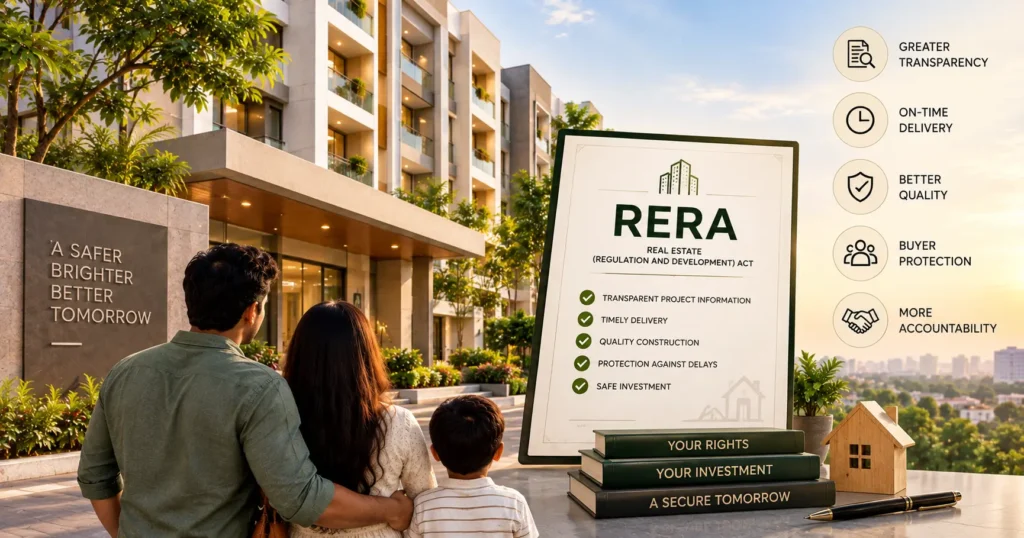
The Real Estate (Regulation and Development) Act, 2016 RERA was created to improve transparency, accountability, and buyer protection. In Chennai, the relevant state authority is the Tamil Nadu Real Estate Regulatory Authority, or TNRERA. RERA helps buyers check project information, understand carpet area, compare timelines and seek remedies where the Act applies. It does not replace legal or technical checks. Here is what to verify before buying a property in Chennai. What Is RERA? RERA stands for the Real Estate (Regulation and Development) Act, 2016. It regulates specified projects, promoters and agents and creates complaint and appeal mechanisms. In Tamil Nadu, TNRERA administers the framework. Buyers can use the official TNRERA website to search registered projects and review records. Not every property requires registration. Statutory exemptions cover certain smaller projects, projects that received a completion certificate before the Act commenced, and specified renovation or redevelopment without new marketing, sale or allotment. However, project age alone is not a reliable test: an ongoing project without a completion certificate when the relevant provisions commenced could require registration. Verify the exact project instead of relying on a verbal claim. Why Was RERA Introduced? Homebuyers historically faced problems such as incomplete disclosure, uncertain delivery dates, misleading promotions, inconsistent descriptions of saleable area, diversion of project collections and difficult dispute resolution. RERA addresses these issues through registration, disclosure and accountability requirements. How Does RERA Protect Homebuyers? 1. Project registration and information transparency A promoter cannot advertise, market, book or sell a covered project in a planning area without registration. The filed information includes promoter details, plans, approvals, location, apartment types, carpet areas, title and encumbrance declarations, and the completion period. Buyers can compare this formal record with the sales material they receive. 2. Carpet-area disclosure RERA defines carpet area as the net usable floor area excluding external walls, service shafts, exclusive balconies or verandahs and exclusive open terraces, while including internal partition walls. Compare like with like; do not compare one property’s carpet area with another’s super built-up area. See Viva Housing’s guide to carpet area, built-up area and super built-up area. 3. Protection of project collections Promoters must deposit 70% of amounts realised from allottees for a project into a separate account in a scheduled bank for that project’s land and construction costs. Withdrawals are linked to completion and prescribed certifications. “Separate account” is more accurate than “escrow.” The rule limits diversion of collections but does not guarantee timely completion. 4. Remedies for qualifying project delays If the promoter fails to complete or give possession according to the agreement for sale, Section 18 provides remedies. A withdrawing allottee may seek return of the amount with prescribed interest and applicable compensation; one who remains may be entitled to prescribed interest for the delay. The result depends on the agreement, facts and applicable order. 5. Accountability for advertisements and representations The Act provides remedies where a person advances money based on an incorrect or false statement in specified advertisements, notices, prospectuses or model properties and suffers loss or damage. Compare sales material with the TNRERA record and agreement, and retain dated copies. 6. Protection during booking A promoter cannot accept more than 10% of the property’s cost as an advance or application fee without first entering into a written and registered agreement for sale. Still check the proposed agreement, total-cost sheet and project record before making any substantial payment. 7. Defect liability after possession Specified structural defects and defects in workmanship, quality, services or promoter obligations under the agreement, when reported within five years from handover, must be rectified without further charge within 30 days. If not, the allottee may seek compensation under the Act. This does not automatically cover every maintenance issue, so document the defect and response. 8. Complaint and dispute mechanism An aggrieved person may complain to the Authority or adjudicating officer, as applicable, for a violation of the Act, rules or regulations. Do not treat 60 days as a guaranteed decision time: the Act provides a 60-day disposal period in relevant contexts and requires reasons when it is exceeded. Follow current TNRERA forms, fees and instructions.Specified structural defects and defects in workmanship, quality, services or promoter obligations under the agreement, when reported within five years from handover, must be rectified without further charge within 30 days. If not, the allottee may seek compensation under the Act. This does not automatically cover every maintenance issue, so document the defect and response. RERA Requirements at a Glance RERA provision What it means for a buyer Project registration Covered projects must register before specified marketing and sales activity Project disclosure Specified plans, approvals, areas and timelines are filed Carpet-area disclosure A standard definition supports clearer comparisons 70% separate account Specified collections are restricted to project land and construction costs Completion period Buyers can compare the declared timeline with their agreement Advertising accountability Remedies may apply to loss caused by false information 10% advance rule An agreement for sale is required before collecting more than 10% Defect provision Specified defects reported within five years must be addressed Complaint framework Aggrieved persons have regulatory routes where applicable How to Check Whether a Property Is RERA Registered in Tamil Nadu Visit the Tamil Nadu RERA portal. Open the relevant registered-project search for a building or layout, as applicable. Search by the available project name, promoter name or registration detail. Match the project name, promoter and location to the offered property. Review the registration period, status, approvals, plans and updates. Compare the record with the brochure, cost sheet, booking form and draft agreement. Registration may be phase-specific. Confirm that the exact building, phase or layout being sold appears in the record. What Should You Check on a TNRERA Project Record? Do not stop at the registration number. Check: registration validity and exact project or phase name promoter’s legal name and project location declared completion or possession information apartment or plot details and carpet area available approvals, plans and project updates displayed extensions, complaints or orders Save a dated

What is UDS in property and undivided share of land in apartments

What Is UDS (Undivided Share) and Why It Matters When Buying a Flat

If you’re considering purchasing a flat in Chennai or indeed anywhere in India, you will certainly come across the term Undivided Share of land. Although the term sounds legalistic and esoteric, it will have an immediate, profound implications for your property value, legality, and future resale. Yet, so many homebuyers miss or misinterpret this. Let’s clarify this in a succinct and matter-of-factness way, based on the actual reality of the Chennai property market. What Is UDS? When you buy a flat in a multi-storey apartment, you are not only buying the built-up area (flat) you are also buying a share of the land that the entire building is constructed on. This share of the land that is allotted to you is referred to as the Undivided Share (UDS). For example, if a developer had 5,000 sq ft of land and built ten apartments on the land, the each apartment could have a UDS of 500 sq ft each. (This is a vastly simplified version of this, the actual calculation varies and in reality, there would be many other factors.) UDS is intangible in the sense that while you can measure, partition and modify the flat, UDS is not something you can tangibly measure on the ground. However, from a legal standpoint it is in fact your share of land. It will be referred to in your sale deed. Why Is UDS Crucial? 1. Legal Ownership of Land UDS is your only legal proof of ownership of land. Without UDS, you own only the structure, which depreciates over time, but not the appreciating asset: land. This is especially important in Chennai where land prices in places like Pallavaram, Madipakkam, Tambaram have been rising steadily over the years. Historically and statistically, the value of your investment will depend more on the land than the building. 2. Future Redevelopment Rights In cities like Chennai it is not uncommon for older buildings to be demolished and redeveloped. For individuals that have a proper UDS in a substantial amount, you are entitled to a proportionate say and share of any redevelopment. A low UDS means your bargaining power and compensation might also be lower. Redevelopment is also tied to Floor Area Ratio (FAR) regulations, which determine how much built-up area is allowed on a given piece of land—making UDS a critical factor. 3. Resale and Market Value Buyers today are better informed. A flat with a higher UDS usually commands a better resale value. It reflects the buyer’s share in the land, which continues to appreciate even if the building ages. Localities like Sembakkam and Pozhichalur are seeing increased interest for this reason, especially among second-time buyers who understand the nuances of land share. 4. Loan Eligibility and Legal Safety Banks in Chennai often evaluate the UDS before approving a home loan. A clear, legally registered UDS is seen as a sign of a clean property title. If UDS is not mentioned or seems too low, it could be a red flag for banks—and for you. Additionally, UDS clarity also protects you against potential litigation in the future. Disputes over land ownership or proportionate share often arise in apartments without properly recorded UDS. Common Pitfalls to Avoid UDS and Chennai’s Changing Real Estate Landscape As space becomes tighter in prime zones and vertical living continues to dominate, UDS becomes even more relevant. In suburbs like Pammal and Sembakkam, where gated communities are emerging rapidly, buyers must be aware of their land share. Smart investors are now actively looking at UDS as a core metric—not an afterthought. With increasing land scarcity and more redevelopment activity driven by improved infrastructure and transit-oriented development, UDS can significantly influence your long-term returns. Why Choose Viva Housing At Viva Housing, we make the invisible tangible. Every apartment we build comes with transparent legal documentation, including clearly defined UDS allocations. We work only on CMDA-approved layouts, ensure RERA compliance, and involve leading legal experts to safeguard your investment. Whether you’re looking at a 2BHK in Pozhichalur or a premium unit in Pallavaram, we ensure your rights to the land are as secure as your home above it. Looking for a new apartment for sale near you? Your journey toward a smart investment in Chennai begins with a decision. Make it count with Viva Housing, the best house builders in Chennai. Explore our upcoming projects today and invest not just in square footage but in future-proof ownership.

Buying a house in Chennai as a smart real estate investment

Why Buying a House in Chennai Is a Smart Investment

Chennai’s property market has always grown at a pace of its own. It’s been growing consistently and quietly through the years. Did you know? – The average price of residential properties in Chennai is ₹7146 per sq ft, which is lower than the average prices in cities such as Mumbai and Bangalore? This makes Chennai one among the top choices for those considering investments for the long run. Buying a house in Chennai is not just about property. Its about entering a market that has firm foundations, good location advantages and an evolving infrastructure. Economic Backbone and Employment OpportunitiesChennai’s diverse economy is one of the core reasons behind its real estate market boom today. Development of IT corridors in OMR and Shollinganallur, active automobile manufacturing centers in Sriperambudur and Oragadam, are part of the reasons why the workforce is lured from all over India and beyond. In this way, the demand for houses for sale in South Chennai has continued to rise with its sustained economic surge. For instance, Chennai’s southern suburbs like Pallavaram, Pozhichalur, and Pammal are close to the IT corridor and Chennai International Airport. And they are gaining the attention of renters today. Though these localities offer relatively affordable housing options compared to the city’s center now, a steady rise in rental demand is predicted. Infrastructure and Connectivity Chennai’s infrastructure expansion has been both strategic and future-ready. The Chennai Metro Rail Phase II is poised to transform how people travel on a daily basis. These developments are bringing the formerly peripheral areas into the urban fold and localities like Madipakkam, Tambaram, and Kolapakkam are now seamlessly connected to city’s center. This connectivity is increasing the real estate value in these suburban areas. Furthermore, with the metro rail expansion, improved arterial roads, and reputed educational institutions and hospitals growing in tandem, the real estate prospects in these neighborhoods look promising. Moreover, with the proposed expansion of the airport and development of logistics parks around Pallavaram and Pozhichalur, these areas are increasingly being seen as long-term investment zones. Looking ahead, these areas are well-positioned not just as convenient places to live but as smart investment choices in Chennai’s evolving real estate landscape. Real Estate Trends and Market Stability Unlike speculative markets, Chennai’s property market is characterised by its resilience. There are no sudden price booms and busts. This means that capital appreciation may be slower. But it is always more stable and predictable. For example, according to recent real estate market trends, rental values in Chennai’s southern suburbs have seen a year-on-year rise of 5%-8%. This indicates a healthy ROI for investors. This steady market performance has changed the preferences of homebuyers and they prioritise long-term value over short-term gains today. Because of this, there is a growing demand for a lifestyle that offers strong infrastructure, built-in facilities, and communities, rather than just a roof over their heads. Hence, gated communities and smart townships are becoming the norm today. Builders like Viva Housing are focusing on delivering value through well-planned projects that integrate essential amenities, green spaces, and safety features. This trend appeals strongly to families, NRIs, and retirees alike, and to people who look for security, comfort, and return on investment. Legal and Regulatory Clarity Tamil Nadu’s RERA (Real Estate Regulatory Authority) has brought much-needed transparency into the Chennai real estate system. Buyers now have recourse in case of project delays, false advertising, or poor construction quality. Developers face stricter requirements because of RERA, allowing only ethical players to thrive. Viva Housing, for instance, follows RERA norms across their housing projects, ensuring that homebuyers have access to all documentation and regulatory approvals upfront. Every land record is digitised today. And so, developments in suburbs like Sembakkam and Madambakkam have seen better land documentation and faster approvals in recent years. This reduces the legal risk significantly when compared to many other Indian cities.  Lifestyle and Social Infrastructure Modern homebuyers don’t just look at square footage—they assess how the locality fits into their lifestyle. The rise of educational institutions, multi-specialty hospitals, and malls across areas like Tambaram and Pallavaram makes them attractive not only for families but also for rental income. Accessibility to reputed educational institutions like the Madras Institute of Technology and Velammal and hospitals such as the Hindu Mission in these regions offers residents a balanced, well-supported lifestyle. Public parks, cultural centres, and retail spaces are increasingly integrated into new housing developments, reflecting the demand for holistic living. Localities like Pozhichalur are quietly evolving from sleepy towns into residential hubs with real, tangible lifestyle upgrades. Why Choose Viva Housing A smart investment isn’t just about picking the right city it’s about choosing the right developer. Viva Housing combines local expertise with future-forward design thinking. Our projects are located in emerging micro-markets like Pallavaram, Pozhichalur, and Pammal areas with high potential for appreciation and a strong livability quotient. From legal documentation and UDS clarity to timely delivery and customer-first support, we walk with you at every step. Our RERA-compliant practices, transparent pricing, and thoughtful planning ensure that your investment doesn’t just grow—it supports the life you envision. Looking for good apartments for sale near you? Or individual villas for sale in Chennai? Your journey toward a smart investment in Chennai begins with a decision. Make it count with Viva Housing, the best house builders in Chennai. Explore Viva Housing’s new developmentsDiscover why Chennai South is becoming a top choice for families, professionals, and investors looking for quality living at the right price.

Pammal real estate investment and connectivity in Chennai

PAMMAL: Chennai’s Wise Haven for Astute Investment

PAMMAL: Chennai’s Wise Haven for Astute Investment In the heart of Chennai’s vibrant real estate landscape, the spotlight is now shining brightly on PAMMAL, an emerging area that promises not just a home but a lifestyle. Boasting a blend of urban development and serene surroundings, PAMMAL is quickly becoming the go-to destination for savvy real estate investors. Unveiling the Allure of PAMMAL Nestled amidst the bustling cityscape, PAMMAL stands out as a beacon of growth and opportunity. With a surge in demand for villas and apartments, this developing area is proving to be a real estate hotspot, rivaling established neighborhoods like Pallavaram, Chrompet, Sanatorium, and Tambaram. Infrastructure Boom and Connectivity What sets PAMMAL apart is its strategic location, seamlessly connected to key areas like Thirumudivakkam, Pallavaram, Anagaputhur, and the Chennai Bypass road. The robust transportation facilities in the region have made it a preferred choice for those seeking convenience and accessibility. Industries, schools, colleges, and religious landmarks dot the landscape, underlining PAMMAL’s commitment to holistic development. The area has witnessed a surge in residential and commercial centers, with a multitude of construction companies launching ambitious projects. Green Haven Amidst Urban Buzz Beyond the concrete jungle, PAMMAL offers a green haven with ample breeze and a pollution-free environment. It’s not just an investment; it’s a lifestyle upgrade. The area’s appeal is further enhanced by its proximity to popular temples like Sooriya Ammam Temple, Navagraha temples, Sri Ponniamman Temple, Sri Nageswarar Temple, and Kundrathur Murugan Temple. Strategic Roadways and Railway Connectivity Strategically positioned, PAMMAL enjoys excellent connectivity with Chennai International Airport, ensuring convenient travel for residents and businesses. The area is well-connected through major roadways like Pallavaram Kundrathur Main Road, Chennai Bypass, Chennai Outer Ring Road, and Pammal Main Road. The Pallavaram and Chrompet railway stations provide seamless rail connectivity, further enhancing accessibility and ensuring that the entire city is within easy reach for the residents of PAMMAL Investment Potential In the ever-expanding city of Chennai, PAMMAL stands as a testament to growth and progress. The increasing influx of individuals seeking education, business opportunities, and employment has fueled real estate development, making PAMMAL an ideal choice for investors. PAMMAL is not just a location; it’s a lifestyle choice. With its green surroundings, excellent connectivity, educational institutions, and cultural richness, investing in apartments in PAMMAL is not just a wise decision; it’s a step towards a brighter future. As the real estate landscape in Chennai continues to evolve, PAMMAL emerges as a hidden gem, ready to welcome those who seek not just a home but a thriving community and a promising investment.