
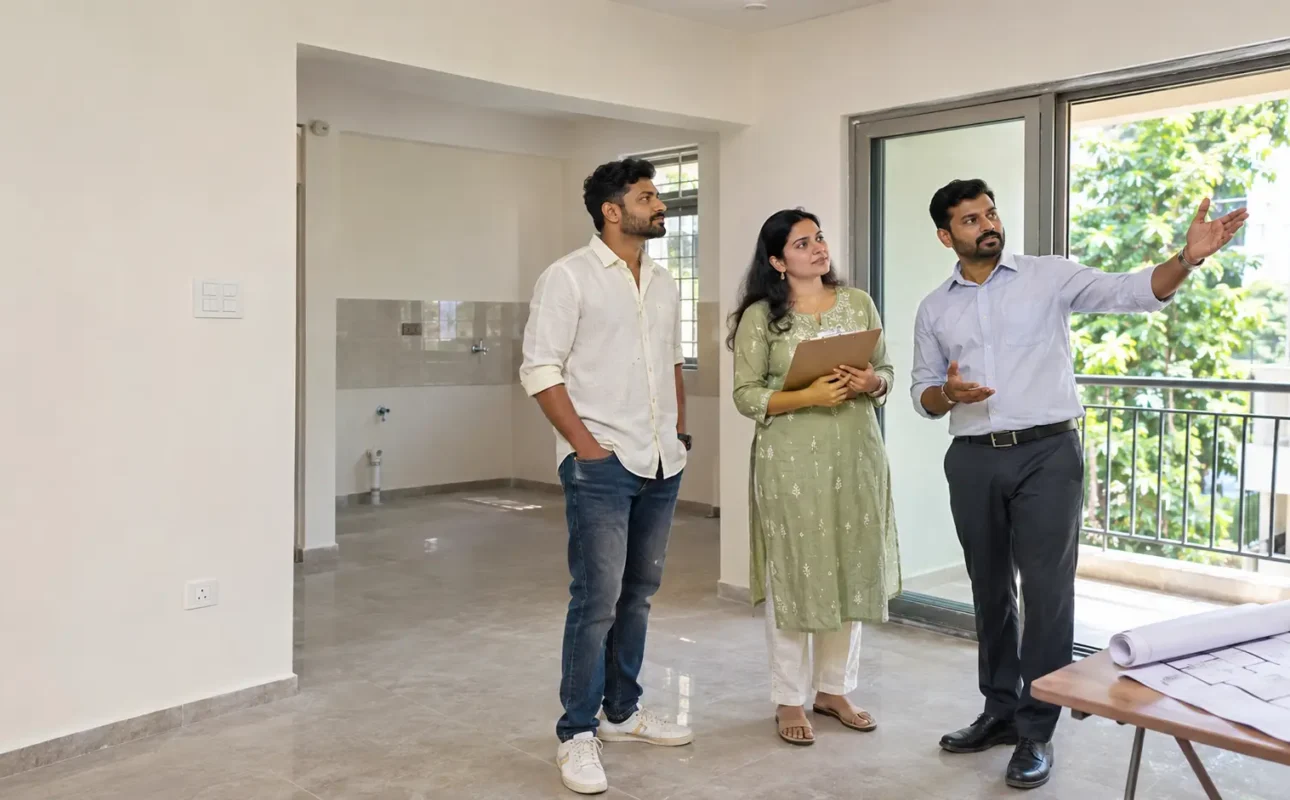
An apartment site visit should help you test the actual home, building, approach road, and daily routine, not simply admire a brochure or sample flat. Use this apartment site visit checklist for Chennai before you shortlist a property or discuss booking.
Carry a notebook or phone, take photographs where permitted, record the answers given by the sales team and ask for important information in writing. If possible, visit with another family member: one person can observe the property while the other records dimensions, questions and follow-up commitments.
A good site visit does not replace an independent legal review, technical inspection or examination of the project documents. It helps you decide whether the property deserves those next steps.
Apartment Site Visit Checklist Chennai: Quick Answer
During an apartment visit, inspect six areas:
- The exact location, approach road and daily route.
- The actual apartment layout, usable space and unit position.
- Natural light, ventilation, noise and orientation.
- The building, parking, lift, staircase and common areas.
- Water, drainage, power backup, maintenance and recurring-cost questions.
- Written project information and the documents your independent advocate should review.
Do not assume that the sample apartment, brochure or locality name represents the exact unit you may purchase. Ask to see the available unit, compare it with the latest written floor plan and record every unresolved question before leaving.
Before You Visit: Prepare a Simple Checklist
Start by writing down your household’s practical requirements. Include the number of bedrooms, work-from-home needs, storage, parking, elderly or childcare requirements, preferred floor and any accessibility concerns.
Prepare these items before the visit:
- A list of your preferred configuration and minimum usable space.
- A comfortable overall budget range.
- A list of regular destinations such as work, school, healthcare and family support.
- Questions about the floor plan, specifications, parking and recurring costs.
- A phone with a measuring app, notebook, pen and camera.
- A copy of any floor plan or project information already shared with you.
Ask one family member to note answers while another inspects the property. If you are an NRI or cannot attend, arrange a live video walkthrough and request photographs of the exact unit, entrance, parking area and approach road. Confirm which details must still be independently verified in person.
Check the Exact Street and Approach Road
Begin the South Chennai apartment visit before you reach the building. Travel from the main road to the exact project entrance and observe the route at the time you normally leave and return.
Check:
- The width and surface of the approach road.
- Turns, junctions, one-way movement and parking pressure.
- Whether a car can enter, turn and drop off passengers comfortably.
- Walking access from the road to the gate.
- Street lighting and visibility after dark.
- Public-transport pickup points and the last-mile route.
- Space for delivery vehicles, visitors and emergency access.
- Nearby construction, commercial activity, traffic noise and dust.
If the property is in Pallavaram, buyers can use Viva Housing’s Flats for sale in Pallavaram Chennai page as a starting point for current locality and project information. The page describes the wider Pallavaram context around GST Road, suburban transport and Chennai International Airport, but your decision must still be based on the exact property entrance and route.
Ask how water is sourced, stored and supplied to the property. Inspect street levels, drainage outlets and signs of standing water or dampness. Where practical, revisit after rainfall. Do not treat one visit as proof that a road is flood-free or that drainage will always perform well.
For broader location checks, refer to Viva Housing’s Chennai Locality Guide, which recommends comparing commute, approach roads, water, drainage and daily services at the exact address.
Inspect the Apartment, Not Only the Sample Flat
A sample flat is useful for understanding a possible finish and layout, but it may not be identical to the unit available for purchase. Ask to inspect the exact unit whenever access is permitted.
| What to inspect | What to check |
|---|---|
| Unit position | Confirm the block, floor, door number, orientation and view. |
| Usable space | Check whether furniture, appliances, storage and work areas fit comfortably. |
| Living and dining | Observe movement space, daylight, ventilation and furniture placement. |
| Bedrooms | Check bed placement, wardrobe depth, window position and privacy. |
| Kitchen | Review workflow, counter length, appliance points, storage and ventilation. |
| Utility area | Check washing-machine space, drying arrangements and service access. |
| Bathrooms | Inspect ventilation, plumbing points, floor slope and visible finishes. |
| Balcony | Check usable depth, privacy, drainage and safety features. |
| Doors and windows | Open and close them. Observe alignment, locks, seals and airflow. |
| Switches and plumbing | Confirm locations against the plan and ask what is included. |
| Noise | Listen for road, construction, lift, generator, common-area or neighbour noise. |
| Area statement | Ask how carpet, built-up and other stated areas are calculated. |
Visit at a time when daylight and heat can be assessed. Notice whether rooms receive natural light, whether air moves between openings and whether a west-facing room becomes uncomfortable. Do not rely only on a rendered view or verbal assurance about ventilation.
Compare the actual unit with the latest written floor plan and specification. Check wall positions, doors, windows, columns, electrical points, plumbing points and balconies. If something differs, ask for the updated drawing or written explanation.
If Chitlapakkam is on your shortlist, you can review Flats for sale in Chitlapakkam Chennai and then confirm the exact project, unit and current details directly. Viva Housing’s locality page currently lists Visha and Vibha as Chitlapakkam apartment options; availability and project-specific details still require confirmation.
Check the Building, Parking and Common Areas
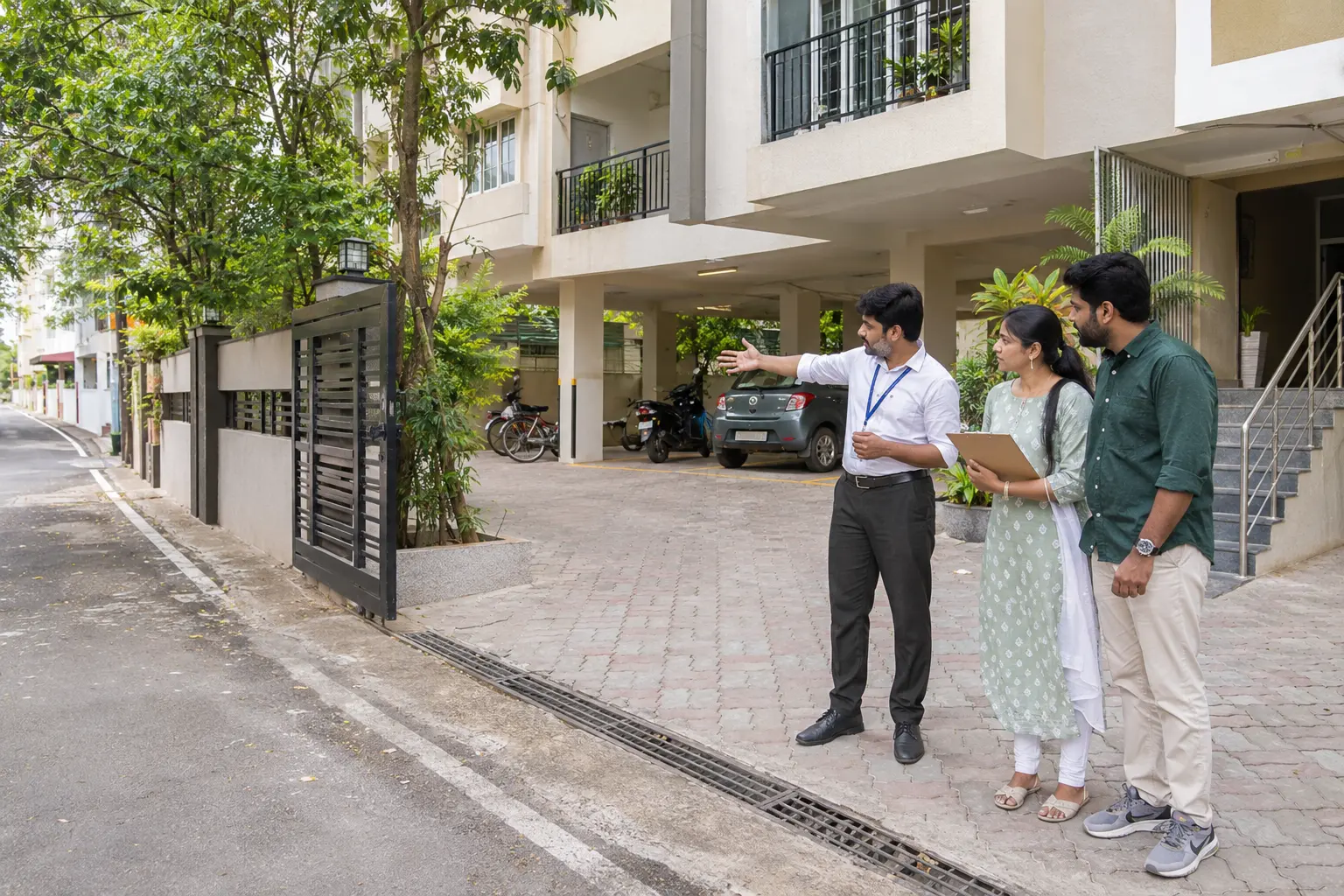
Walk through the building instead of limiting the visit to the apartment.
Inspect:
- Main entrance, visitor access and security process.
- Lift size, waiting area and visible operating condition.
- Staircase width, handrails, lighting and ventilation.
- Corridors, common doors and floor surfaces.
- Terrace access and visible maintenance arrangements.
- Parking location, allocation and manoeuvring space.
- Visitor parking and two-wheeler parking.
- Water-storage areas and waste-collection arrangements.
- Common lighting, cleanliness and signs of dampness.
- Amenities, operating rules, access restrictions and current availability.
Ask whether parking is assigned, shared, covered, open, mechanical or subject to separate terms. Request the parking number and conditions in writing. If you use an electric vehicle, ask whether charging is available, who controls access and whether any additional installation or usage rules apply.
You may observe fire-safety equipment or signs during the visit, but do not treat a visual check as certification of compliance. Ask for the relevant current documents and have them reviewed where necessary.
Viva Housing’s current projects directory lists developments across locations including Pallavaram, Chitlapakkam, Kolapakkam, Pammal, Pozhichalur and Kodambakkam. Use Explore current Viva Housing projects to identify relevant options, then request current project information before visiting.
Ask the Everyday-Living Questions
Use this table to guide the conversation with the sales team or site representative.
| Question to ask | Why it matters | Ask for in writing where applicable |
|---|---|---|
| What is the water source and storage arrangement? | Helps you understand the property’s daily utility planning. | Water arrangement and responsible maintenance party. |
| How is drainage managed during heavy rain? | Helps you identify what must be checked at street and site level. | Relevant project information and maintenance responsibility. |
| What does power backup cover? | Backup may apply differently to apartments, lifts and common areas. | Exact backup scope and exclusions. |
| What are the maintenance charges? | Monthly expenses affect long-term affordability. | Current estimate and list of included services. |
| How is parking allocated? | Parking terms can affect daily convenience and ownership expectations. | Parking number, type and agreement terms. |
| What are the visitor and delivery rules? | These rules affect family visits and everyday services. | Written community or association rules if available. |
| Are pets permitted? | Important for households with existing or planned pets. | Applicable written policy. |
| Is construction activity continuing nearby? | Noise, dust and access may change during construction. | Current stage and expected work information. |
| Are any works pending before handover? | Helps you understand what remains to be completed. | Written status and handover details. |
| Who will answer open questions after the visit? | Prevents important issues from remaining unresolved. | Named contact and written follow-up. |
Ask questions neutrally and record the exact answer. If the answer is “to be confirmed”, keep it on your follow-up list instead of treating it as settled.
Questions to Ask Before You Leave the Site
Before ending the visit, ask:
- Is this the exact unit currently available for me to consider?
- Can I receive the latest floor plan, specification and itemised cost sheet?
- What is included and excluded in the written specification?
- How is parking described in the agreement or project documents?
- What maintenance charges and recurring expenses should I plan for?
- Which documents can my independent advocate review before payment?
- What is the current construction or completion stage?
- Are any works, fixtures or common facilities still pending?
- What should I verify during a second visit?
- Who will provide written answers to open questions?
- What is the process after the site visit?
- Which current project details should I confirm again before booking?
Do not feel pressured to make a decision simply because you have visited the property. A site visit is an information-gathering stage.
After the Visit: Compare Notes Before You Book
Compare every shortlisted home using the same checklist. Record the actual unit, floor, usable layout, light, ventilation, noise, parking, approach road, household routine and unresolved questions.
A second visit can reveal details missed during the first appointment. Visit at another time of day and, where practical, after rainfall. Ask a family member who did not attend the first visit to review your photographs and notes.
Request current written information instead of relying on memory or verbal explanations. Calculate the complete cost, including applicable purchase charges, registration, interiors, loan-related expenses, maintenance and regular travel.
For the purchase process, use Viva Housing’s Property Buying Guide as a general planning resource. Before making a substantial or non-refundable payment, arrange independent legal advice.
The Legal Checklist for Buying a Flat in Chennai recommends checking ownership documents, parent deeds, the Encumbrance Certificate, applicable revenue records, planning and building permissions, TNRERA details where applicable, and the draft agreement. It also advises an independent advocate to review the exact transaction.
Apartment Site Visit Checklist You Can Save
Location and commute
- Tested the route from the main road to the exact gate.
- Checked normal morning and evening travel conditions.
- Identified public-transport access and last-mile movement.
- Checked walking route, lighting and drop-off space.
- Considered school, work, healthcare and family-support journeys.
Street and drainage
- Observed road width, turns and parking pressure.
- Checked road surface and entrance level.
- Asked about water, storage and drainage arrangements.
- Looked for dampness, standing water or construction impact.
- Planned a rain-day or second visit where practical.
Apartment layout and daylight
- Confirmed the exact unit, floor and orientation.
- Compared the unit with the latest written floor plan.
- Checked furniture placement and storage.
- Tested windows, doors, ventilation and daylight.
- Inspected kitchen, utility area, bathrooms and balcony.
- Listened for road, construction and common-area noise.
Building and parking
- Checked entrance, security, lift and staircase.
- Inspected corridors and common areas.
- Confirmed parking type, number and manoeuvring space.
- Asked about visitor parking and EV charging.
- Asked about amenities, rules and current access.
Utilities and maintenance
- Asked about water source and supply.
- Asked what power backup covers.
- Requested maintenance estimates and inclusions.
- Asked about waste collection and common-area upkeep.
- Recorded pending works and responsible contacts.
Documents and next steps
- Requested the latest floor plan and specification.
- Requested an itemised cost sheet.
- Listed documents for independent review.
- Recorded unanswered questions in writing.
- Planned a second visit before booking.
- Confirmed the next contact and follow-up date.
Book a Site Visit With Viva Housing
A site visit becomes more useful when you arrive with a clear household checklist and enough time to inspect the property properly. Browse current Viva Housing projects, review the relevant locality information and prepare your questions before requesting a visit.
You can contact Viva Housing to arrange a site visit. The contact page lists the sales number +91 99626 11122 and advises buyers to call before visiting. Confirm the project, timing, current details, and availability directly with the team.
FAQs
1. What should I inspect during an apartment site visit?
Inspect the exact unit, layout, daylight, ventilation, noise, finishes, doors, windows, kitchen, bathrooms, balcony and storage. Also inspect the approach road, parking, lift, staircase, common areas, water arrangements and drainage. Record questions and request important answers in writing.
2. Should I visit an apartment more than once before booking?
A second visit is useful, especially when you need to assess traffic, noise, heat, lighting or rain-day conditions. Visit at a different time and compare your notes. If you cannot attend personally, arrange a live video walkthrough and request photographs of the exact unit and access areas.
3. What questions should I ask the sales team during a site visit?
Ask whether you are seeing the exact available unit, what the written specification includes, how parking is allocated, what maintenance may cover, what power backup applies to, which works remain pending and which documents can be reviewed by your independent advocate.
4. How can I check whether the flat layout suits my furniture and family?
Take basic furniture measurements or use a measuring app. Compare them with the latest floor plan and inspect door swings, window positions, storage, circulation space and appliance points. Consider whether the rooms can support future needs such as a study, children’s room or eldercare.
5. What documents should I request after an apartment visit?
Request the latest floor plan, specification, itemised cost sheet, parking terms and current project information. Depending on the property and transaction, ask your advocate which ownership records, Encumbrance Certificate, approvals, registration details, agreement and handover documents require review.
6. Should I inspect the road and drainage around the building?
Yes. The road and surrounding street affect daily access, deliveries, parking, walking and rain-day movement. Inspect the route from the main road to the gate, look at levels and drainage outlets, ask practical questions and revisit after rainfall where possible.
7. Can I book a flat immediately after the first site visit?
You can decide to continue discussions, but avoid rushing into a substantial or non-refundable payment. First compare the exact unit, complete cost, written terms and documents. Arrange independent legal review and obtain satisfactory answers to important open questions before committing.