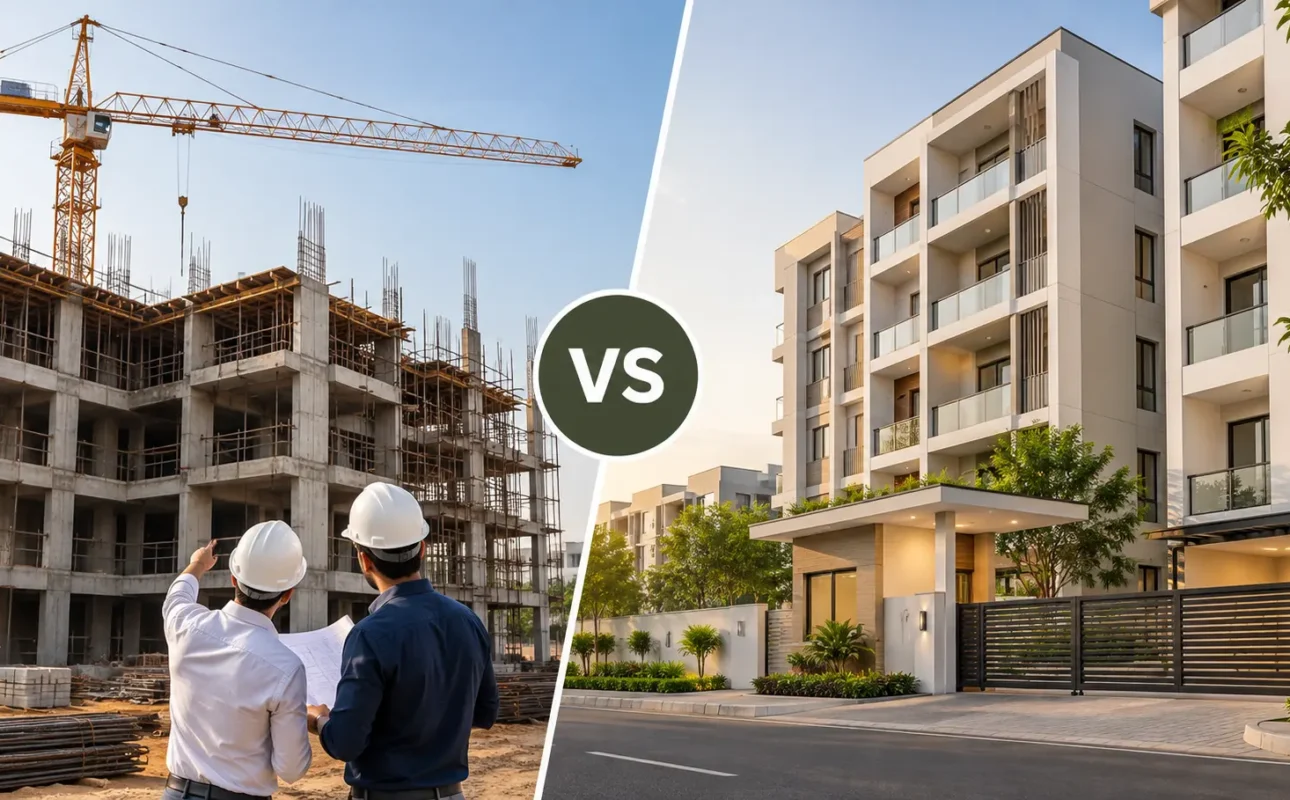
An under-construction property may suit buyers who can wait, prefer construction-linked payments and accept execution risk. A ready-to-move property may suit buyers who need possession sooner and want to inspect the completed home. Neither is automatically better. The right choice depends on your deadline, complete budget, current rent, financing plan and risk tolerance.
Under-Construction vs Ready-to-Move Property: Quick Comparison
| Factor | Under-construction property | Ready-to-move property |
|---|---|---|
| Price | May have a lower entry price; not guaranteed | May carry a completion premium |
| Possession | After construction and handover requirements | After purchase, registration and agreed handover |
| Construction risk | Greater exposure to delay and execution risk | No future construction wait; quality checks remain essential |
| Customisation | Limited changes may be possible if the developer permits them | Usually limited to interiors or permissible alterations |
| Home loan | Disbursement may follow construction progress | Processed against a completed property and transaction |
| GST | May apply based on status and prevailing law | May fall outside GST when completion conditions are met |
| Tax benefits | Timing depends on current rules and eligibility | Eligibility may begin sooner when conditions are met |
| Rental income | Normally only after possession | May begin sooner after handover and preparation |
| Price-growth potential | Possible, never guaranteed | Finished product and surroundings are clearer |
| RERA protection | Verify registration and project disclosures where applicable | Review registration history and completion records |
| May suit | Buyers who can wait and manage construction-stage uncertainty | Buyers who prioritise inspection and earlier occupancy |
This table is a starting point, not a substitute for reviewing the exact property, agreement, approvals, payment schedule and total acquisition cost.
What Is an Under-Construction Property?
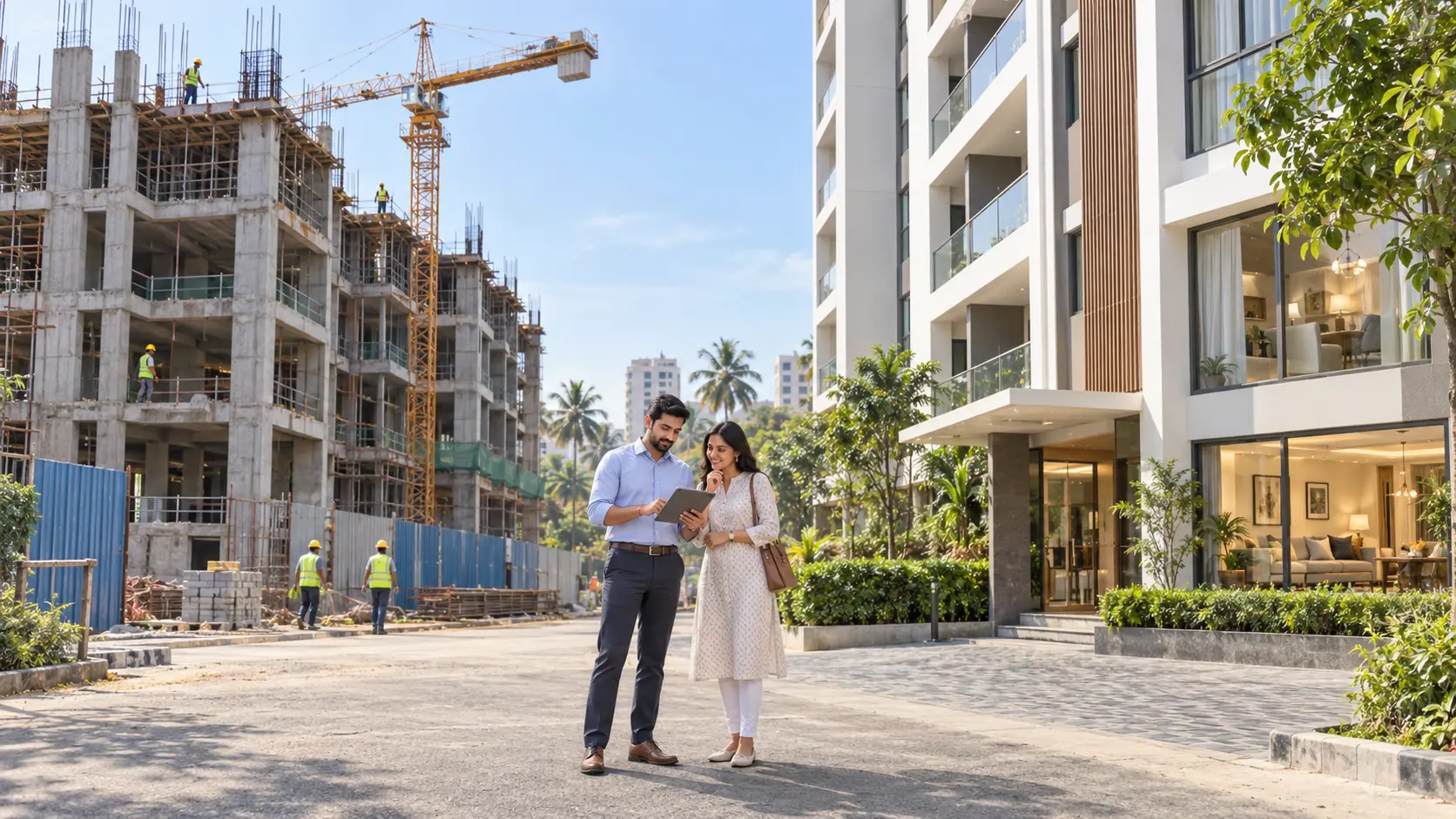
An under-construction property is purchased before the building and selected unit are completed and ready for lawful handover. Payments and loan disbursement may follow construction milestones. The buyer therefore assesses plans, specifications, contractual commitments, the developer’s record and site progress—not a finished home. Before booking, confirm the declared schedule, delay provisions, specifications, payment stages and applicable registration details.
Advantages of Buying an Under-Construction Property
Potentially lower entry cost
Some projects have a lower entry price than comparable completed homes. Compare total costs because this varies by stage, demand and location.
Construction-linked payment flexibility
Payments may be spread across agreed construction milestones. Ensure every instalment matches the agreement and verified progress.
Possibility of price growth
Value may rise if the project and market develop favourably, but this is not assured. Delays, excess supply or weaker demand can remove the expected advantage.
Newer planning and specifications
Newer projects may offer contemporary layouts and building systems. Compare these with approved documents and written specifications, not promotional images alone.
Limited customisation opportunities
The developer may permit selected finishes or limited non-structural changes. Record the scope, charges and deadline in writing.
Disadvantages of an Under-Construction Property
Possession-delay risk
Construction can face approval, funding, supply or execution delays. Review the agreement’s timeline and delay terms, then verify site progress.
Project and execution risk
The final unit cannot yet be fully inspected. Buyers rely more on execution, approved plans and the agreement. RERA registration, where applicable, does not replace independent due diligence.
Rent and loan outflow may overlap
Rent may overlap with pre-EMI, interest or EMI-related payments. Calculate this with the lender before committing.
Final delivery may differ from expectations
Renders and sample flats are illustrative unless the feature appears in binding documents. Record agreed specifications and changes.
Dependence on developer execution
Review completed work and the exact project’s records. Reputation alone is not sufficient evidence of delivery.
What Is a Ready-to-Move Property?
A ready-to-move property is a completed home available for inspection and intended for possession after purchase, registration and handover requirements. “Ready” should not be accepted only as a marketing label. Verify applicable completion or occupancy documents, approved plans, title, encumbrance records, utilities, maintenance arrangements and pending work. Inspect the exact unit, not only a model apartment.
Advantages of Ready-to-Move Properties
Earlier possession
Buyers may move in sooner after the transaction and handover, helping households with a firm relocation date or ongoing rent.
Inspection of the actual home
You can assess layout, ventilation, workmanship, common areas, parking and access. Record defects and agreed corrections before handover.
Established surroundings
Completed developments make access, water arrangements, maintenance and surrounding conditions easier to assess.
Earlier rental opportunity
Rental preparation may begin after purchase and handover. Actual rent and occupancy remain market-dependent.
No future construction wait for the unit
The home is already built, removing the wait for its construction. Documentation, maintenance, and defect risks still require review.
Disadvantages of Ready-to-Move Properties
Potentially higher upfront cost
A completed home may be priced higher because the buyer can inspect and use it sooner. Compare the total cost, including statutory charges, maintenance deposits, parking, interiors, financing, and moving expenses, not only the advertised price.
Less scope for customisation
Changes are generally limited to interiors and alterations permitted by the building rules. Structural or service-related changes may be restricted.
Older inventory in some cases
Not every ready property is newly completed. Check the building’s age, maintenance history, waterproofing, lifts, utilities, common areas and previous occupation where relevant.
Maintenance and defect considerations
Inspect the exact unit and common areas carefully. Ask how pending works, defects, maintenance charges and association responsibilities will be handled after purchase.
Under-Construction vs Ready-to-Move: Detailed Comparison
Price and payment
Under-construction homes may use stage-linked payments; ready homes usually require funding over a shorter transaction period. Compare itemised cost sheets on the same basis.
Possession timeline
An under-construction buyer waits for completion. A ready-home buyer may obtain possession sooner after legal, financial and handover steps. Avoid universal timelines.
Construction and developer risk
Unfinished work creates greater execution risk. With a ready property, inspect existing quality and maintenance. Verify the specific project in either case.
Home-loan considerations
Both types may qualify for loans subject to lender, borrower and document checks. Under-construction disbursement may follow construction stages. Compare interest, pre-EMI or EMI treatment, charges, tenure and conditions.
GST and tax implications
GST depends on construction or completion status, payment timing and prevailing law. Confirm the exact unit’s treatment with a qualified tax professional before payment; stamp duty and registration are separate. Income-tax deductions also depend on current law, tax regime, ownership, completion or possession and individual eligibility.
Rental income
A ready property may be rentable sooner. An under-construction home normally cannot generate rent until handover. Neither rent nor occupancy is assured.
Price-growth potential
An early buyer may benefit if the project and market progress favourably. A ready home provides clearer evidence of the finished product. Neither guarantees appreciation.
Property inspection
Ready homes allow inspection of the exact unit. Under-construction buyers rely more on plans, specifications, site progress and previous work.
RERA protection
Where registration is required, verify project status, disclosures and timeline on the TNRERA project portal. Registration does not guarantee title, quality, returns or on-time delivery.
Which Option Is Better for Different Buyers?
| Buyer type | Option that may fit | Main reason to evaluate |
|---|---|---|
| First-time homebuyer | Either | Prioritise affordability, document review and a manageable timeline rather than the label alone |
| Buyer needing immediate accommodation | Ready-to-move | Earlier possession may reduce the need for temporary housing or continued rent |
| Buyer who can wait | Under-construction | Construction-linked payments may fit a longer timeline if risk is acceptable |
| Buyer currently paying high rent | Often ready-to-move | Compare rent saved against any price premium and complete ownership cost |
| Investor seeking earlier rent | Ready-to-move | Rental preparation can begin sooner, subject to market demand |
| Long-horizon investor | Either | Compare acquisition cost, project risk, location fundamentals and exit liquidity |
| Buyer prioritising lower initial outflow | Often under-construction | Stage-linked payments may help, but future instalments and rent overlap must be affordable |
Checklist Before Choosing Either Property Type
- Review the developer’s completed projects and delivery record.
- Check whether RERA registration is applicable and verify current portal information.
- Obtain an independent legal review of title, encumbrance and transaction documents.
- Compare the visible construction stage with the declared schedule.
- Read the agreement’s possession date, delay provisions and cancellation terms.
- Test connectivity from the exact project entrance during relevant travel times.
- Review schools, healthcare, shopping, public transport and surrounding land use.
- Calculate the complete ownership cost, including statutory charges, financing, interiors and maintenance.
- Confirm loan eligibility, disbursement conditions and comfortable repayment with the lender.
- For a ready home, inspect the exact unit and applicable completion or occupancy documents.
For further checks, read Viva Housing’s property buying guide and property legal guide.
Under-Construction vs Ready-to-Move: Which Should You Choose?
Choose an under-construction property when you can wait, the payment schedule suits your cash flow and you are comfortable with the verified project’s execution risk. Choose a ready-to-move property when earlier possession and inspecting the completed unit matter more, even if the initial cost may be higher.
Compare actual properties using the same checklist: total cost, documents, status, financing, monthly outflow, location and handover conditions. Explore current Viva Housing projects or contact Viva Housing for current information and site visits. Verify project facts before booking.
Frequently Asked Questions
1. Is it better to buy an under-construction or ready-to-move property?
An under-construction home may be suitable when you can wait and prefer a construction-linked payment schedule. A ready-to-move home may be better when you need earlier possession and want to inspect the completed unit. Compare the exact properties rather than selecting only by category.
2. Is an under-construction property cheaper than a ready-to-move property?
It may have a lower entry price, but this is not universal. Compare the full cost, including GST where applicable, stamp duty, registration, loan interest, rent paid during construction, interiors, maintenance deposits and other charges.
3. Is GST applicable on ready-to-move properties?
The sale may fall outside GST when the applicable legal completion conditions are met, such as when the entire consideration is received after the relevant completion certificate or first occupation condition. The result depends on the exact facts and prevailing law. Confirm it with the developer’s documents and a qualified tax professional; stamp duty and registration charges are separate.
4. Can I get a home loan for an under-construction property?
Yes, subject to the lender’s assessment of the borrower, project and property documents. Disbursement may occur in stages linked to construction progress. Confirm interest treatment, pre-EMI or EMI structure, charges and disbursement conditions before signing.
5. Which property type is better for investment?
Neither type guarantees better returns. Under-construction property may provide a lower entry point in some cases but carries execution and waiting risk. A ready property may offer earlier rental potential and clearer physical assessment. Compare location demand, complete cost, project quality and expected holding period.
6. What should I check before buying an under-construction property?
Verify the project’s registration where applicable, approved plans, title and encumbrance records, agreement, specifications, construction stage, payment schedule, declared completion timeline, delay terms and developer record. Arrange independent legal and technical review where needed.
Disclaimer
This article provides general educational information and does not constitute legal, tax, financial or investment advice. GST, income-tax provisions, project registration, approvals, possession status, loan terms and property documents can vary and may change. Verify the exact transaction with the relevant authority and qualified professionals before paying or signing.