Gated community living combines a private home with controlled access, shared spaces and collectively managed facilities. Chennai homebuyers may value organised entry, maintenance and amenities. Trade-offs include recurring charges, community rules, visitor procedures and commute concerns.
A gate alone does not make one development better. The right choice depends on how well the community is planned, operated and matched to your household’s needs. This guide explains the main benefits, drawbacks and checks to complete before choosing a gated-community home.
What Is a Gated Community?
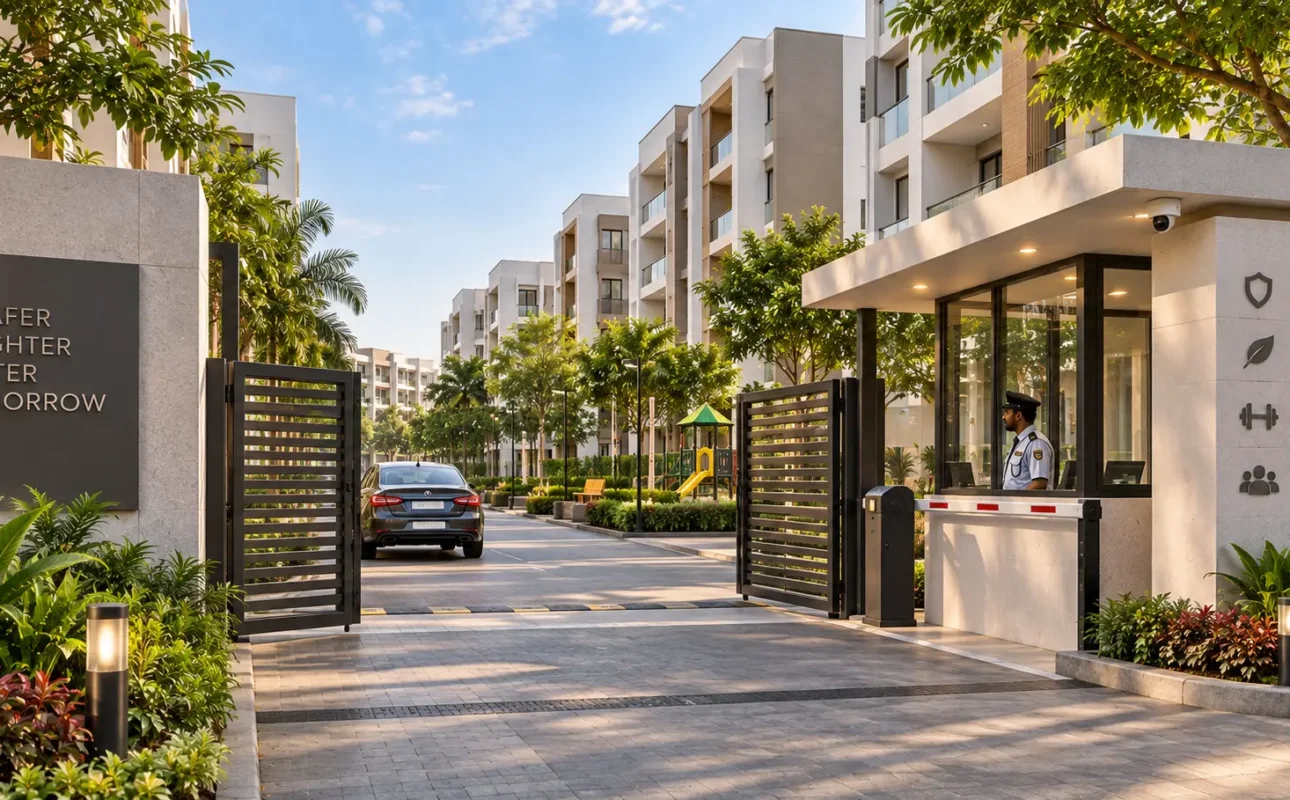
A gated community is a residential development with a defined boundary and managed entry. It may contain apartments, villas, row houses or plotted homes. Shared spaces are generally managed by the developer, a maintenance agency or a residents’ association, depending on the project’s stage.
Facilities differ. Check what is completed, operational and included in the maintenance charge instead of relying on the label alone. Controlled access can organise entry, but it does not guarantee complete safety.
Gated Community Living at a Glance
| Potential advantages | Potential trade-offs |
|---|---|
| Managed entry and visitor procedures | Higher recurring maintenance costs may apply |
| Shared amenities and open spaces | Facilities may be crowded or restricted at peak times |
| Organised common-area maintenance | Community rules can limit individual flexibility |
| Opportunities for neighbourhood interaction | Visitors and deliveries may follow access procedures |
| Coordinated services and resident communication | A suburban location may not suit every commute |
Compare the exact facilities, operating arrangements, costs and location before deciding whether the format suits you.
Pros of Gated Community Living
1. Managed Access and Security Coordination
Controlled entry can organise visitor, delivery and vehicle access. Some communities also provide guards, common-area CCTV or visitor systems. Ask how routine and emergency entry works in practice.
2. Shared Amenities and Everyday Convenience
Residents may have play spaces, walking paths, gyms or community halls close to home. Value depends on usability, operating status and capacity. Use Viva Housing’s guide to apartment amenities in Chennai to compare facilities.
3. Organised Common-Area Maintenance
Cleaning, landscaping, lighting and equipment upkeep may use a common maintenance arrangement. Service quality depends on its scope, budget and response process. Ask what the monthly charge covers.
4. Opportunities for Community Interaction
Shared spaces and resident activities can help neighbours meet. This may suit people who value community interaction, although participation remains optional.
5. Potential Buyer and Tenant Appeal
Managed access, maintained common areas and useful amenities can appeal to some buyers or tenants. They do not guarantee higher rent, faster resale or appreciation; demand depends on many property and market factors.
Cons of Gated Community Living
1. Higher Ongoing Costs
Security, housekeeping and amenities create recurring expenses. There may also be a deposit, corpus contribution, usage fee or major-repair cost. Request the complete fee structure.
2. Community Rules
Rules may cover renovations, parking, pets, noise, deliveries and common spaces. Read them before committing, particularly if you want greater individual control.
3. Visitor and Delivery Procedures
Guest registration or delivery restrictions may add time. Check the process for visitors, domestic staff and emergencies.
4. Shared Facilities Can Become Crowded
Facilities may become crowded after full occupancy. Ask about resident capacity, booking rules, and separate usage fees.
5. Location and Commute Trade-offs
Some large communities may not suit a buyer’s commute. Test the exact route at realistic times and check access roads, transport and daily services.
What to Expect When Living in a Gated Community
Daily life depends less on the gate itself and more on how the development operates.
| Area | What to expect and verify |
|---|---|
| Entry | A process for guests, deliveries and service providers; confirm emergency access too |
| Maintenance | A recurring charge; ask what it covers, who handles complaints and how major repairs are funded |
| Management | Developer-led maintenance or an association structure; check the current decision and reporting process |
| Amenities | Shared access, operating hours and possible booking rules; confirm that advertised facilities are operational |
| Essentials | Inspect parking, water, drainage, sewage, waste collection and the scope of power backup |

Gated Community vs Standalone Apartment
| Factor | Gated community | Standalone apartment |
|---|---|---|
| Access | Usually controlled through a shared entry system | Often simpler or more open, depending on the building |
| Security arrangements | May have coordinated staff and common-area systems | Varies by the size and management of the building |
| Amenities | Often provides more shared facilities | Usually offers fewer shared facilities |
| Maintenance | Managed collectively across a larger community | Usually handled at a smaller-building level |
| Ongoing cost | Can be higher because more services are shared | May be lower, but depends on services and repairs |
| Rules | Often more formal and detailed | May provide greater individual flexibility |
Neither format is automatically better. Compare the exact properties, management quality, complete costs, and location, not only the labels.
Who Is Gated Community Living Suitable For?
It may suit buyers who prioritise managed entry, maintenance, shared recreation and community interaction. It may be less suitable for people who want minimal charges, fewer rules, unrestricted visitor access or a specific central location. Compare your needs and complete budget using Viva Housing’s property buying guide for Chennai homebuyers.
What to Check Before Buying in a Gated Community
Use this checklist for the exact home and project you are considering:
- Verify the title, applicable TNRERA information, planning and building approvals, agreement and transaction-specific documents.
- Confirm carpet area, floor plan, undivided share where applicable, specifications, parking and current status in writing.
- Request an itemised cost sheet including maintenance deposits, corpus contributions and amenity fees.
- Confirm which amenities are completed, operational, included and appropriately sized.
- Review the monthly charge, management arrangement and process for major repairs.
- Inspect water, drainage, sewage, power backup, lifts, waste collection and emergency access.
- Check resident and visitor parking, internal roads, pedestrian access and accessibility.
- Test the commute and nearby services at realistic times.
- Where practical, visit when facilities are busy and speak with existing residents.
Use Viva Housing’s property legal guide for Chennai buyers as a starting point. A general checklist cannot replace advice for the exact property and transaction.
Questions to Ask Before Choosing a Gated Community
- What does the monthly maintenance charge include, and when was it last revised?
- Which advertised amenities are completed, operational and included in the charge?
- How are visitors, deliveries, domestic staff and emergency vehicles admitted?
- What security systems are functioning, and who monitors or maintains them?
- Who currently manages the common areas, and how are complaints handled?
- Which rules apply to residents, pets, parking, renovations and common-space use?
- What are the water, sewage, drainage and power-backup arrangements?
- What is the actual commute from the project entrance during normal peak hours?
Explore Viva Housing Projects
Viva Housing offers residential projects across multiple Chennai locations. Compare every current project on its own specifications, access, facilities, maintenance, documentation and location; do not assume the same community format applies to all. Explore current Viva Housing projects and request the latest written details. You can also contact Viva Housing to arrange a site visit.
Gated Community Living: Is It Right for You?
Gated community living can offer managed access, shared facilities and organised maintenance. It can also bring higher costs, formal rules and visitor procedures. The right answer depends on the exact development and how well it fits your budget, commute and routine. Compare operational facilities, complete costs, documents and management arrangements. A careful site visit and written answers matter more than a long amenity list.
Frequently Asked Questions
1. What is a gated community?
A gated community is a bounded residential development with managed entry. It may contain apartments, villas, row houses or plotted homes, with shared areas managed collectively. Features differ between developments.
2. What are the main advantages of living in a gated community?
Potential advantages include organised access, common-area maintenance, shared amenities and resident interaction. Their value depends on whether facilities are operational, maintained and appropriately sized. Controlled access does not guarantee complete safety.
3. What are the disadvantages of gated community living?
Trade-offs include maintenance charges, rules, visitor procedures, crowded facilities and commute concerns. Review the exact costs, facilities and location because they vary by development.
4. Are maintenance charges higher in gated communities?
They can be higher when a community funds security, lifts, power backup, housekeeping or amenities. Ask about the amount, inclusions, deposits and process for increases.
5. What should I check before buying a gated community apartment in Chennai?
Check documents, applicable TNRERA and planning information, area, parking, total cost, maintenance and status. Inspect utilities, amenities and the commute. Arrange independent legal review where appropriate.
6. What is the difference between a gated community and a standalone apartment?
A gated community usually has controlled entry and more shared facilities. A standalone apartment often has fewer homes, simpler common areas and potentially lower recurring costs. Actual conditions depend on the property.